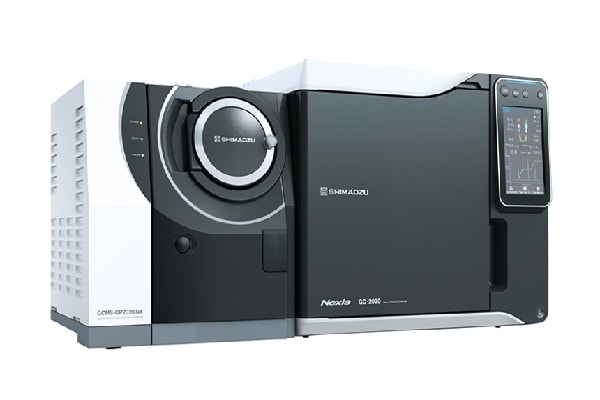
GCMS-QP2020 NX


- SPME-GC-MS supports effective monitoring of water environments. - Excellent sensitivity, achieving quantification of β-cyclocitral in water within the ultra-trace level. - SPME provides a solvent-free extraction, efficient, and highly sensitive method for detecting β-cyclocitral.
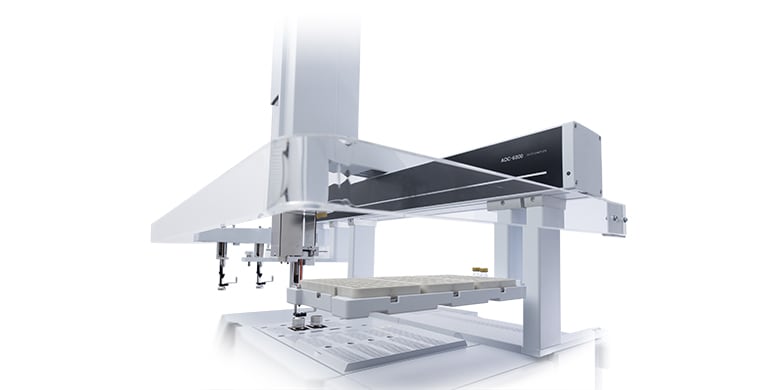
Cyanobacterial blooms, commonly known as algal blooms, cause rivers and lakes to turn vividly green due to the excessive growth of cyanobacteria. This phenomenon is caused by factors such as global population growth, industrial pollution, and rising water temperatures caused by climate change. Cyanobacterial blooms produce volatile organic compounds (VOCs) like β-cyclocitral and β-ionone, which cause unpleasant odors and reduce the quality of drinking water and aquatic products. This leads to consumer complaints and economic losses in aquaculture and water treatment. Detecting and quantifying β-cyclocitral at trace levels is therefor essential for effective water management. However, conventional solvent extraction methods often fail to detect β-cyclocitral, as it requires acidification or heating to be effectively released from the matrix. In contrast, solid phase microextraction (SPME) enables efficient detection by facilitating the thermal desorption of β-cyclocitral from sample matrices onto the fiber. Moreover, SPME reduces solvent use and shortens sample preparation time compared to traditional extraction techniques, making it a suitable approach for the analysis of thermally induced volatile compounds like β-cyclocitral. This application news describes the suitability of β-cyclocitral analysis using SPME automatic injection (AOC-6000 Plus) and GCMS-QP2020 NX of Shimadzu. The developed method enables highly sensitive quantitation of β-cyclocitral, achieving detection at the pg/mL level.
July 10, 2025 GMT