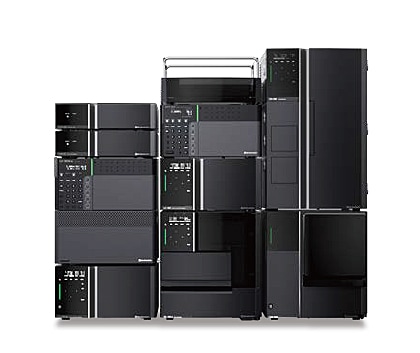
Nexera UC


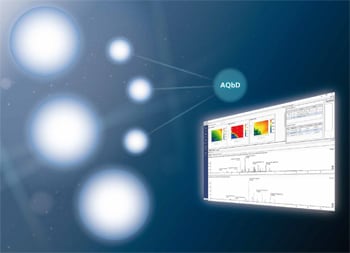
- LabSolutions MD enhances the efficiency of the entire SFC method development workflow. - Column screening can be automated using column switching valves, while mobile phase preparation and optimization of modifier composition can be automated using mobile phase switching valves.
Supercritical Fluid Chromatography (SFC) is a separation technique that employs supercritical carbon dioxide as the primary mobile phase. Due to its high diffusion coefficient and low viscosity, supercritical carbon dioxide allows high flow-rate delivery at lower column backpressure compared to high-performance liquid chromatography (HPLC), enabling shorter analysis time. It is also particularly effective for the separation of structurally related compounds. However, supercritical carbon dioxide has a polarity similar to that of hexane and exhibits low elution strength on its own. Therefore, it is common practice to add organic solvents (modifiers) to the mobile phase to adjust its polarity. Methanol, acetonitrile, 2-propanol, and ethanol are commonly used as modifiers. By appropriate selection and combination of these modifiers, the interactions between the analytes and the column stationary phase can be controlled, allowing diverse separation patterns. Since column and modifier selection strongly influences retention behavior, optimal separation ideally requires evaluation across multiple columns and modifiers. However, such investigations are labor- and time-intensive. Additionally, gradient conditions, column oven temperature, and backpressure settings also contribute to the separation, and therefore these parameters must be optimized as well. In this article, efficient SFC method development using LabSolutions MD was demonstrated using a mixture of six small-molecule pharmaceuticals as a model sample.
November 11, 2025 GMT