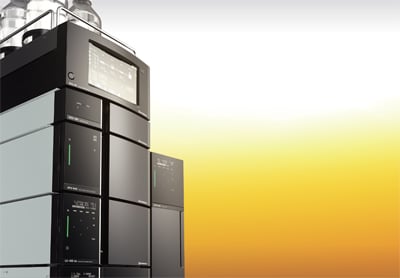
Nexera XS inert


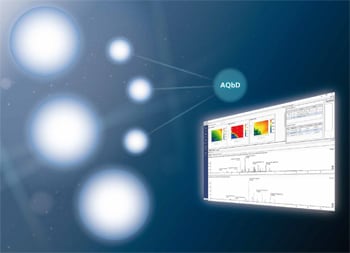
- LabSolutions MD significantly reduces the manual effort associated with HPLC method development, including mobile phase screening and the investigation of various chromatographic parameters. - The integrated AI algorithm facilitates the optimization of gradient profiles, independent of the user's level of expertise. - LabSolutions MD is particularly effective in refining separation conditions for oligonucleotide samples containing impurities, such as species with varying chain lengths.
Nucleic acid drugs such as antisense oligonucleotides are mainly manufactured by chemical synthesis. Reversed-phase ion-pair chromatography (RP-IP) is used to separate and purify these compounds with HPLC. However, the separation pattern varies depending on the type and concentration of the organic solvent and ion-pair reagent used in the mobile phase, and the behavior of the variation depends on the base composition and chain length in the sequence, as well as the presence or absence of modified nucleic acids. In this article, the separation conditions in PR-IP for a simulated sample containing different oligonucleotides assumed as a target sequence and related impurities of different chain length were optimized. Efficient method screening was performed in the three steps of “initial screening of mobile phase,” “optimization of pH and oven temperature of mobile phase,” and “gradient optimization” using LabSolutions MD, an analytical method development supporting software.
November 30, 2025 GMT
Some products may be updated to newer models