
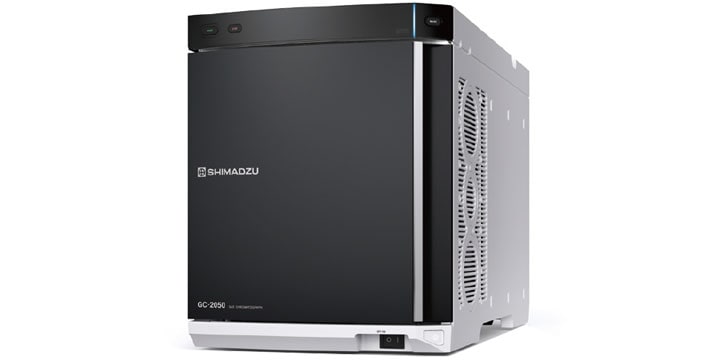
Brevis GC-2050


- Levels of aromatics in gasoline containing many difficult-to-separate impurities were determined using ASTM D5580. - The levels of specific aromatics were determined by using two columns with different polarities and different flow path switching times. - This system, which includes the compact GC-2050 gas chromatograph, can determine oxygenates in gasoline (using ASTM D4815) and a variety of different gasoline additives.
Aromatics, such as toluene and xylene, are sometimes added to gasoline to improve the octane number. Measuring the levels of these aromatics is essential for quality control in gasoline production. It is also important for environmental protection, in particular, for reducing emissions of benzene, a hazardous substance, as well as for sustainable energy use that reduces the environmental impact of gasoline while maintaining its performance. ASTM D5580 is a standard test method that uses gas chromatography to measure aromatics in gasoline. Gasoline aromatics can be separated more effectively by switching between two gas chromatography columns of different polarities and venting non-aromatic components from the system. This Application News describes using the Brevis GC-2050 gas chromatograph to determine aromatics in gasoline by applying ASTM D5580.
December 23, 2025 GMT