
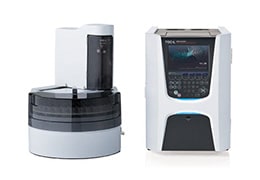
TOC-L Series


- Samples such as chloroisocyanuric acid, which are difficult to detect using a wet oxidation TOC analyzer, can be measured with high sensitivity using the combustion oxidation TOC-L, which has a strong oxidizing power. - One sample can be measured quickly, typically within 10-20 minutes.
In facilities where people have direct contact with water, such as swimming pools, hot springs, and bathhouses, strict water quality management is essential to protect public health and safety. Total organic carbon (TOC) measurement is widely used to detect water quality degradation caused by microbial growth and contamination with foreign substances. Solid powder chloroisocyanuric acids (including dichloroisocyanuric acid and trichloroisocyanuric acid), which exhibit minimal chlorine deactivation, are commonly used as disinfectants for swimming pool water instead of sodium hypochlorite solutions. However, because chlorinated isocyanuric acid is a recalcitrant substance, it is challenging to detect using wet oxidation TOC analyzers due to its resistance to oxidation and decomposition. In contrast, a combustion oxidation TOC analyzer can measure chloroisocyanuric acids with high sensitivity and recovery rates due to its strong oxidizing power. In this application, we compared the TOC measurement results for sodium dichloroisocyanurate using a combustion oxidation TOC-LCPH analyzer and a wet oxidation TOC-VWP analyzer.
January 20, 2026 GMT