
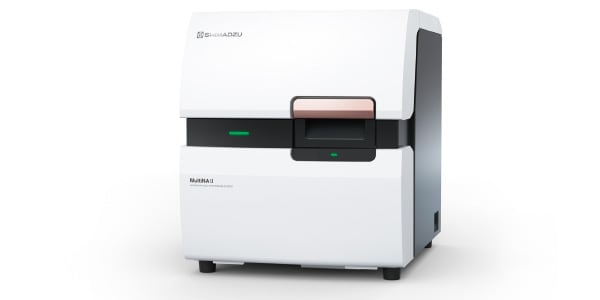
MultiNA II MCE-301, Microchip Electrophoresis System for DNA/RNA Analysis


- The electrophoresis operation can be performed almost fully automatically. - Meat species can be identified from trace amounts of samples. - The target size can be automatically detected by fingerprinting analysis.
To ensure food safety and security, the Food Sanitation Law, JAS Law, and other laws and regulations require labeling of the origin, meat species, and parts of meat. In addition, the consumption of pork is strictly forbidden in the Muslim and Jewish religions, and the labeling of information on the species of meat contained in meat and meat products is very important. Thus, there is a need for meat species identification technology to guarantee peace of mind and quality for various consumers. There are two methods to identify meat species: protein-based (ELISA: enzyme-linked immunosorbent assay) and gene-based (PCR: polymerase chain reaction). Protein-based methods are relatively simple and inexpensive to analyze, but are not suitable for discriminating between close species or from processed foods. On the other hand, gene-based methods can be used to analyze even processed foods because DNA is relatively stable against heat. Here, in addition to examples of DNA detection from meat using PCR and electrophoresis, examples of analysis for meat species identification from processed meat products will be presented.
January 27, 2026 GMT
Some products may be updated to newer models