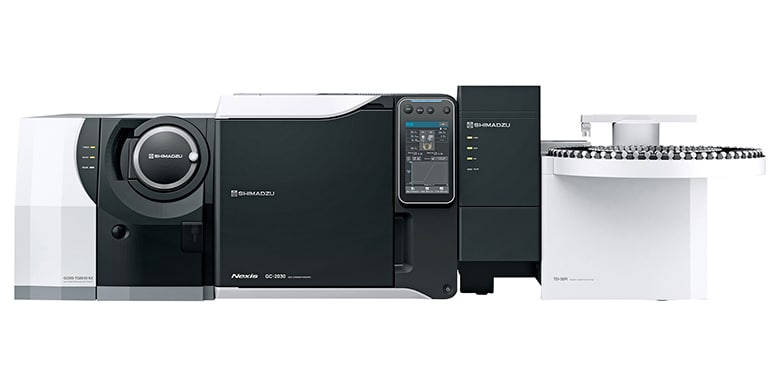
GCMS-QP2020 NX


- Comprehensive analysis of VOCs from non-invasive breath samples is feasible with this system. - No equipment such as sampling pumps is required, enabling breath collection in remote locations. - Internal standards support consistent comparison of analytical results across sample groups.
Exhaled breath is a non-invasive sample that is easy to collect and imposes minimal burden on subjects. It is known to contain volatile organic compounds (VOCs) that reflect metabolic states and disease conditions within the body. More than 1,000 types of VOCs exist in breath, and numerous studies have reported the search for breath markers across various disease areas, including inflammatory diseases, cancer, and metabolic disorders. Consequently, extensive research is being conducted in the field of breathomics. While GC-MS is widely used for comprehensive and highly sensitive analysis of trace components in breath, differences in pretreatment steps, such as sample collection, affect measurement results. Therefore, optimizing analytical protocols to enhance reproducibility and consistency is essential. This Application Note compares breath collection methods using Tenax tubes and MonoTrap using a thermal desorption-GC-MS system to determine the optimal collection method. Additionally, breath samples from healthy subjects and subjects with inflammatory conditions were analyzed using this analytical system to evaluate the usefulness of measuring and comparing VOC profiles with this approach.
March 3, 2026 GMT