TOC-L Series


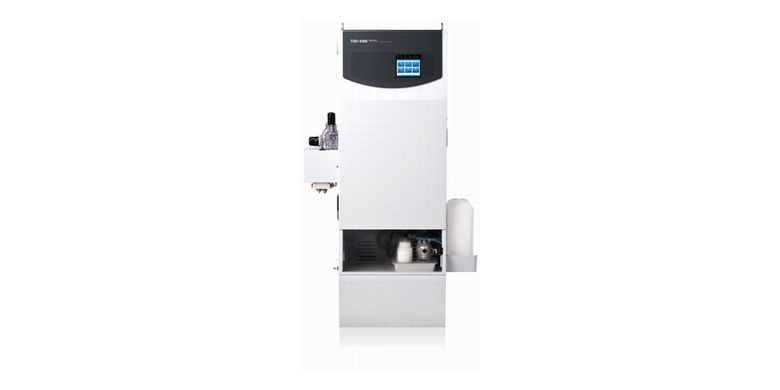
- Phenol leakage into wastewater can be detected using a TOC analyzer without pretreatment. - The TOC-L laboratory TOC analyzer enables single-instrument monitoring of wastewater, process water, and cleaning water. - Rapid detection of phenol leakage in wastewater is achieved through continuous monitoring using the TOC-4200 on-line TOC analyzer.
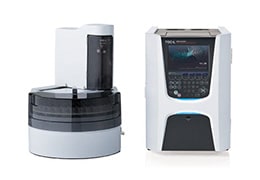
Phenol is a widely used industrial chemical employed in the production of plastics, pharmaceuticals, and other products. Because phenol is toxic and has a strong odor, its presence in process water, cleaning water, and wastewater must be carefully controlled, and leaks must be detected at an early stage. The conventional 4-aminoantipyrine colorimetric method (4-AAP method) is specific to phenol; however, it requires extraction, pH adjustment, and other pretreatment steps, which make the analysis time-consuming. Total organic carbon (TOC) analysis, by contrast, oxidizes organic compounds in the sample and measures the resulting CO2. This allows rapid evaluation of organic contamination without pretreatment, regardless of the type of organic compound present. The Shimadzu TOC-L total organic carbon analyzer can be used not only for wastewater management but also for quality control of process water and cleaning processes. The TOC-4200 on-line TOC analyzer enables rapid detection of phenol leakage through continuous monitoring. This article presents an example of phenol leakage detection in wastewater using the Shimadzu TOC-L total organic carbon analyzer, which employs the combustion catalytic oxidation method.
March 3, 2026 GMT