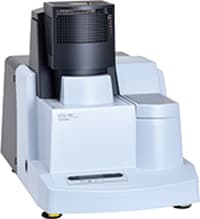
DTG-60 Series


- The fixed carbon, volatile matter, and ash of biocoke can be measured by the DTG-60. - The combustion characteristics of biocoke can also be evaluated by using the DTG-60. - TG-DTA measurement can simultaneously grasp the endothermic and exothermic behaviors during pyrolysis and combustion, allowing a more comprehensive evaluation.
Biocoke is a type of solid fuel produced using plant-derived organic resources (biomass) as the raw materials. Biocoke enables high-temperature combustion over an extended time period, and has also attracted attention as a zero-emission fuel which does not generate waste in the production process. It is produced by heating biomass under high-temperature and high-pressure conditions. A stable fuel with high compressive strength can be obtained by this process, allowing easy transportation and storage, as well as long-term preservation. As a fuel for industrial furnaces and boilers, biocoke is used as a substitute for conventional fossil fuels. It is also expected to be used as a sustainable energy source because its CO2 emissions are lower than those of fossil fuels. The diversity of the raw materials that can be used to produce biocoke, which include woody materials and agricultural residues, is also another feature. In this article, the volatile matter, fixed carbon, and ash of biocokes produced from waste wood and buckwheat husks were evaluated using a Shimadzu DTG-60 simultaneous TG/DTA.
March 24, 2026 GMT