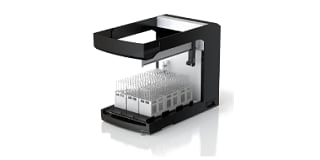
Nexera lite inert


- Both fluorescently labeled and unlabeled antibodies can be fractionated simultaneously under real time monitoring using PDA and fluorescence detectors. - With metal free LC, stable data can be acquired even when mobile phases contain high salt concentrations. - Low and medium pressure columns for protein purification can be applied to the LC system, helping reduce back pressure on the column.
Fluorescently labeled antibodies are widely used in assays such as flow cytometry and immunofluorescence staining. Fluorescent substances for antibody labeling can be categorized into low molecular weight fluorescent dyes (e.g., FITC and Alexa Fluor) and fluorescent proteins (e.g., phycoerythrin (PE) and allophycocyanin (APC)). Fluorescent proteins exhibit fluorescence intensities several tens of times greater than those of fluorescent dyes, thereby providing sufficient sensitivity for detecting antigens even at low abundance. Unreacted fluorescent substances remaining in the antibody solution during the labeling process can cause high background levels. Therefore, purification of fluorescently labeled antibodies is expected to improve the signal to noise (S/N) ratio. This article presents purification of antibodies labeled with the fluorescent protein R-phycoerythrin (R-PE) by gel filtration chromatography (GFC).
March 26, 2026 GMT