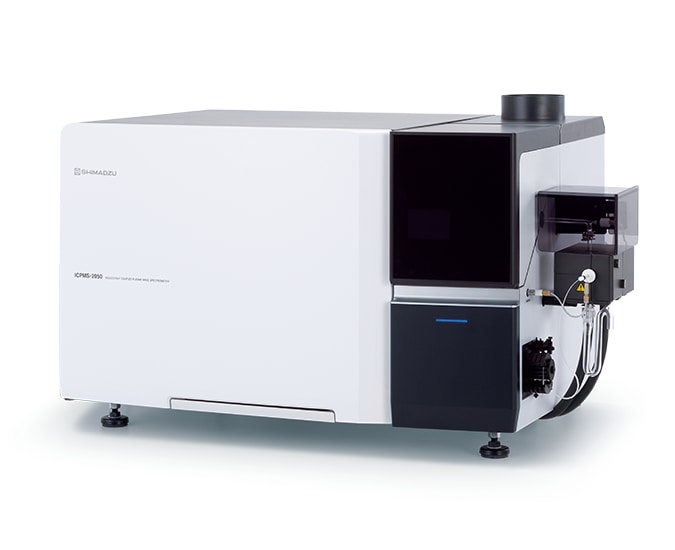
iMScope QT


- Combining iMScope QT with LA-ICP-MS lets you measure organic molecules and inorganic elements from the same tissue section. - IMAGEREVEA MS can analyze data from both instruments in one software. - Using the Nexera Organic Acid Analysis System, citric acid can be quantified easily and conveniently.
MALDI mass spectrometry imaging (MSI) is a powerful technique that visualizes the spatial distribution of compounds in tissue sections. In positive-ion mode, target analytes are often detected as potassium- or sodium-adduct ions formed with endogenous potassium and sodium present in the section. For example, citric acid in strawberry fruit tissue is detected as a potassium adduct in positive-ion mode. However, although potassium is abundant in plant tissues, it is heterogeneously distributed, and this heterogeneity could potentially influence the MSI image of the potassium-adduct of citric acid. Therefore, in this report, this hypothesis was examined using multimodal imaging that combines the iMScope QT with laser ablation (LA) ICP-MS, together with quantitative evaluation using the Nexera Organic Acid Analysis System.
March 26, 2026 GMT
Some products may be updated to newer models