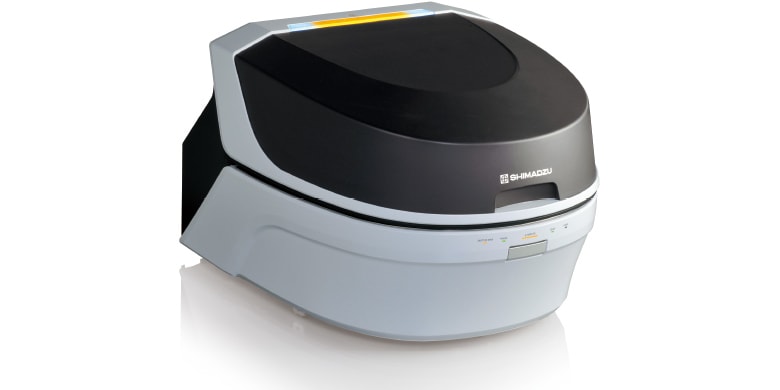
EDX-7200


- Inorganic elements in urine can be quantified at the ppm level without any complicated sample pretreatment. - Qual-quantitative analysis is possible using the FP (Fundamental Parameter) method, which does not require standards. - Qual-quantitative results are obtained within 10 minutes per sample.
Inorganic element poisoning, including heavy metals, is caused by accidents or criminal incidents, and the causative elements are diverse. Although some of these elements are highly toxic, there are cases in which it is difficult to distinguish them at an early stage because they lack specific symptoms of poisoning. Therefore, analytical methods for rapid screening of these elements are required in forensic research. Inorganic elements are generally analyzed by ICP-AES or ICP-MS. Although these techniques allow trace-level quantitation, they require chemical pretreatment such as dilution and deproteinization, and the samples are limited to liquid specimens. In contrast, energy dispersive X-ray fluorescence spectrometer (EDXRF) offers sufficient sensitivity in the concentration range associated with poisoning and enables simple, non-destructive analysis in a short time. This application describes the results of quantitative analysis of 15 elements in urine by the calibration curve method, and qual-quantitative analysis by the FP (Fundamental Parameter) method based on sensitivity coefficients installed in the instrument. The errors in the quantitative values obtained by the FP-based qual-quantitative analysis method were approximately ±20 %, indicating that sufficient quantitative accuracy was achieved. Screening can be performed within 10 minutes per sample.
May 19, 2026 GMT