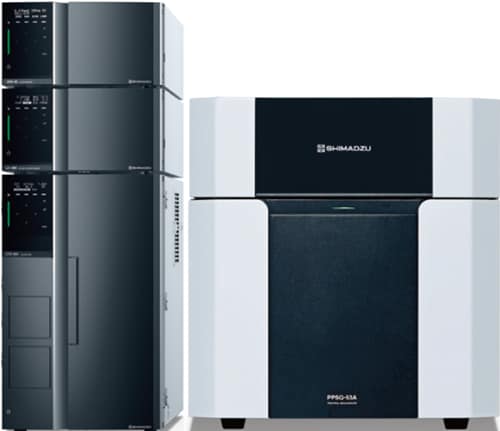
PPSQ-51A/53A


- Edman degradation allows for the reliable determination of amino acid sequences. - With optimized analytical conditions and simple, user-friendly software, the system is easy to operate. - The use of an isocratic system helps reduce operating costs.
In recent years, biopharmaceuticals, including antibody drugs, have become important treatment options across a wide range of areas, such as cancer, autoimmune diseases, and rare diseases, and are further increasing their presence in the pharmaceutical market. While these biopharmaceuticals are highly effective, their molecular structures are complex, and even slight differences in manufacturing processes or culture conditions can affect their quality characteristics. For this reason, rigorous quality assessment through structural and characterization analyses is essential in the development and manufacturing of biopharmaceuticals. In particular, N-terminal amino acid sequence analysis, which verifies the primary structure of proteins, is used as a key analytical method for confirming the identity of the target protein and ensuring quality. Protein sequencers that utilize the Edman degradation method are employed for N-terminal amino acid sequence analysis, enabling the reliable determination of the N-terminal sequences of proteins and peptides. Here, we present an example of N-terminal amino acid sequence analysis of humanized IgG monoclonal antibodies derived from Chinese hamster ovary cells, using the PPSQ-51A/53A isocratic protein sequencer equipped with an SPD-40 detector.
July 13, 2026 GMT