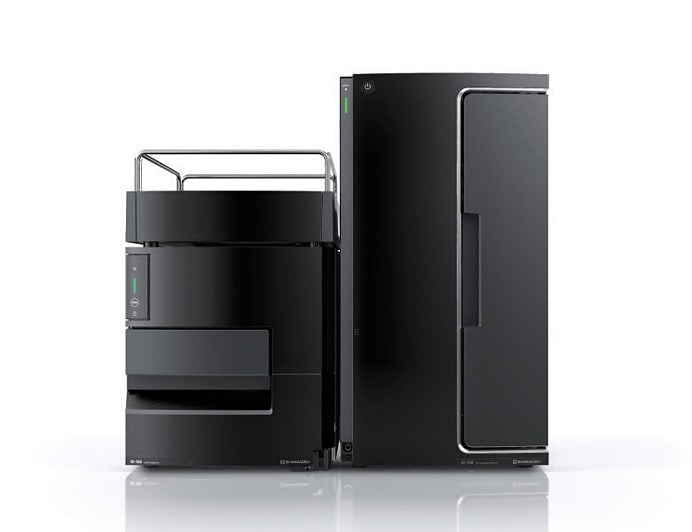
Nexera IC Ion Chromatograph


- Analysis of chloride and sulfate ions in fuel ethanol can be conducted in accordance with ASTM D7319-22. - Accurate quantitative determination, exhibiting excellent linearity and repeatability, can be achieved at concentration levels significantly below the limits specified by the ASTM criteria.
First-generation bioethanol produced from raw materials such as corn and sugarcane has been utilized to achieve carbon neutrality. However, research and development for second-generation bioethanol produced from non-food, cellulose-based raw materials is also underway to avoid competition with food crops. In Japan, eight companies, including Toyota Motor Corporation, have formed the “Research Association of Biomass Innovation for Next Generation Automobile Fuels” (raBit) to advance research on next-generation bioethanol technologies. Shimadzu participates as a supporting member and promotes research and development through analytical technology cooperation. It is known that the presence of chloride and sulfate ions in fuel ethanol can form engine residue, leading to reduced engine performance. ASTM D4806-25 specifies fuel ethanol quality as criterion of chloride ion must not exceed 6.7 mg/kg and that of sulfate ion must not exceed 4 mg/kg. ASTM D7319-22 includes test methods for chloride and sulfate ions in fuel ethanol using ion chromatography. In this application, we present an example of the analysis of chloride and sulfate ions in bioethanol using the Nexera IC in accordance with ASTM D7319-22.
August 24, 2026 GMT