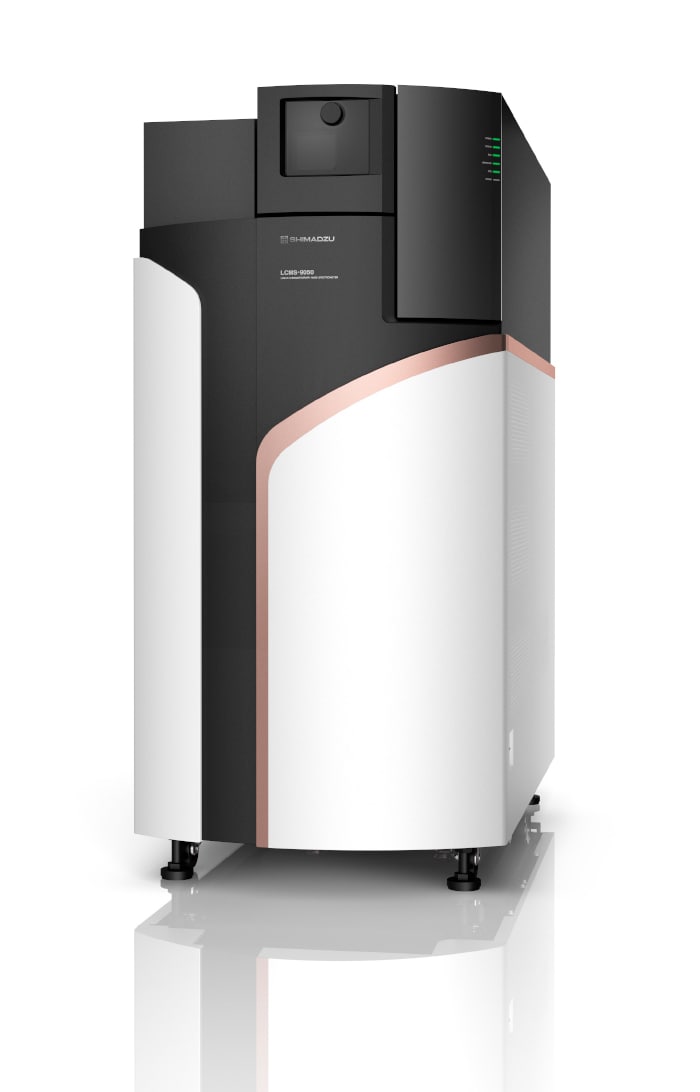
LCMS-9050


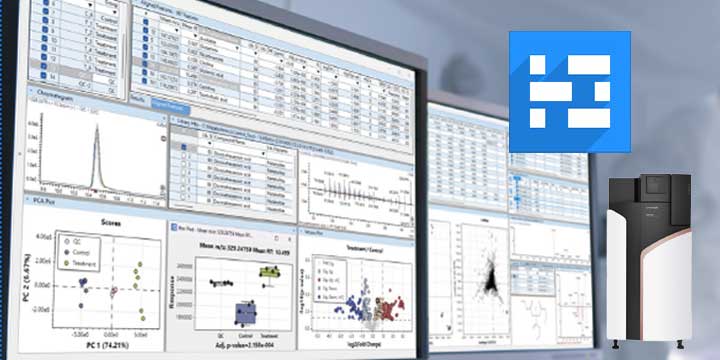
- Food commodities were measured by LC/QTOF mass spectrometry using a modified Pretreatment Optimised Injection Sequence (POISe) to enhance retention and peak shape of polar analytes. - Non-targeted analysis (NTA) software, LabSolutions Insight Profiler, was applied to perform feature detection, data alignment, and compound identification and successfully detected 280 test compounds at MRL concentration of 10 µg/kg. - Additional compounds outside the scope of routine analysis were identified using in-house and third-party repositories.
Residual pesticide analysis is central to food safety, yet conventional targeted quantitation with LC/TQ or GC/MS is inherently limited to predefined analyte panels. Although these platforms provide high sensitivity and quantitative precision, expanding coverage requires labour-intensive method development, optimisation, and validation. To address the growing chemical complexity of agrochemical residues, workflows are increasingly adopting high-resolution mass spectrometry (HRMS) based non-targeted acquisition strategies. These strategies enable simultaneous targeted quantitation and large-scale suspect screening within a single experiment. In this study, a unified LC/QTOF acquisition workflow was developed to support both targeted quantitation and non-targeted screening at scale. Leveraging large, curated screening databases and advanced data processing with the LabSolutions Insight Profiler software application, the method facilitates high-confidence identification of both known and previously unmonitored pesticide residues. This integrated strategy significantly enhances analytical coverage while maintaining data integrity, offering a scalable solution for next-generation multi-residue analysis in complex food matrices. To test the capability of non-targeted analysis (NTA), a matrix sample (olive oil) was spiked at a concentration of 10 µg/kg, a concentration typically defined as the maximum reporting limit (MRL) for most pesticides. Analysis was then extended to unknown samples to determine if additional compounds could be identified outside the scope of routine analysis.
September 29, 2026 GMT
Some products may be updated to newer models