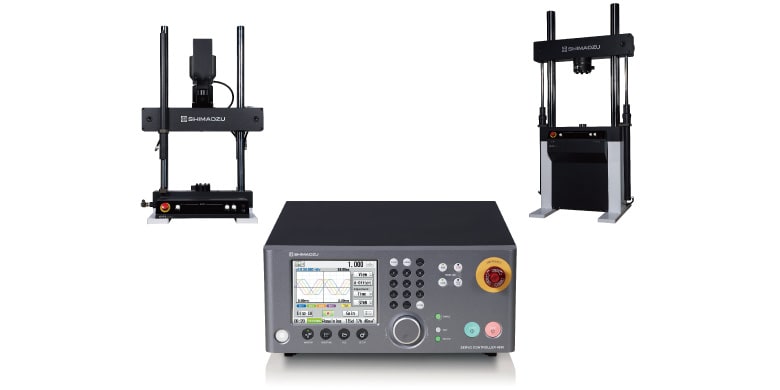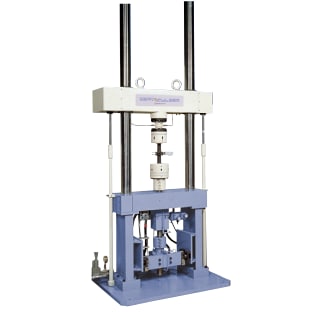
Axial Force and Torsion Testing Machine


- Torsional shear strength of adhesives can be evaluated under conditions simulating torsional loads in actual service. - Static and fatigue torsional shear tests can be performed consistently with the same equipment configuration. - Servo Controller 4830 enables stable torsional shear fatigue testing at the set torque.
In recent years, demand for joining dissimilar materials to reduce weight has been growing in the transportation equipment sector, including the automotive and aerospace industries, and the use of adhesives for structural bonding is expanding. Tensile shear strength testing is widely performed to understand the mechanical properties of adhesives. In actual service environments, however, torsional loads are often applied to bonded surfaces, for example around drive shafts and in motor mounting parts. Therefore, evaluating the strength and deformation behavior in the torsional direction is important for ensuring the reliability of bonded joints, in addition to tensile shear properties. This article introduces an example of torsional shear testing of aluminum alloy specimens bonded with a two-component epoxy adhesive using an axial force and torsion testing machine. In addition to evaluating the static torsional shear strength, torsional shear fatigue tests were performed to evaluate the fatigue properties.
November 24, 2026 GMT
Some products may be updated to newer models