Flexural Test Methods for Plastics: ISO 178 and JIS K 7171


Material Testing System
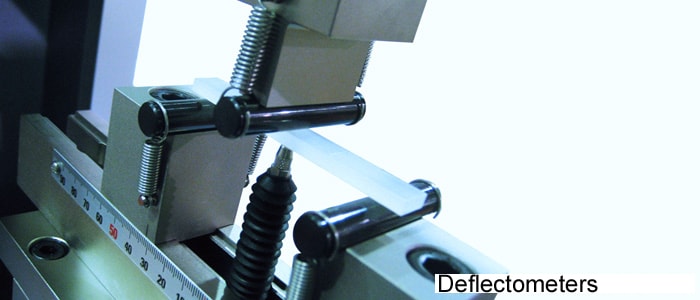
Based on their thermal properties and light weight, plastics have recently come to be used in a variety of applications and sectors, from small gears to airplane fuselages. A variety of tests must be performed to evaluate these materials, from tensile tests to flexural tests and compression tests. Of these, a flexural test is performed to examine material characteristics when flexed by an external force. Because components subject to an external force will flex in reaction to a bending moment, the flexural test is one of the most basic tests used to evaluate materials. Previous testing standards that define a three-point bending flexural test for plastics did not require the deflection-measuring system. As a result, tests detected specimen, instrument deflection and indenter depression together as a total, which is a method not suited to accurate measurements of flexural modulus of elasticity. Amended standards (ISO178:2010, Amd.1:2013 and JIS K 7171:2016) have been amended and include either use of a deflection- measuring system with "ISO 9513 Class 1" absolute accuracy of within 1 %, or use of compliance correction to remove testing machine deflection. A three-point bending flexural test was performed on PC, PVC, and GFRP specimens in compliance with the amended standards, where the flexural modulus of elasticity of each plastic was calculated using crosshead displacement, compliance correction and the deflection measuring instrument.
March 29, 2018 GMT
Some products may be updated to newer models