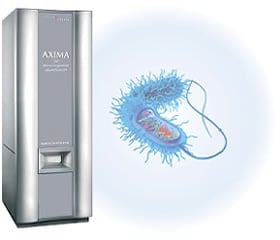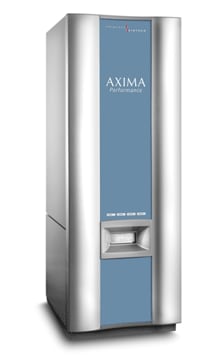
AXIMA Performance


Identification of bacteria is associated with the environmental management and clinical microbiological testing in the food and pharmaceutical field, etc. The identification methods most commonly applied are morphological observation, physiological and biochemical characteristics testing, and DNA sequence analysis. Simple identification at the genus to species level is conducted by DNA sequence analysis, in which the 16S rRNA gene sequencing technique has become widely used in recent years; however, the following shortcomings of this approach underscore the need for a new microbial identification method. 1) Extraction of the DNA from the sample and determination of the DNA base sequence typically requires considerable time and effort. 2) These techniques require familiarity with gene handling, such as PCR and DNA sequencing. 3) Discrimination at the subspecies or strain level is generally difficult. Discrimination even at the species level can often be difficult depending on the species (Example: Bacillus cereus and Bacillus thuringiensis).
April 10, 2014 GMT
Some products may be updated to newer models