


Life Science Research
Metabolomics Analysis for Life Science Research
Metabolome analysis, which aims to comprehensively analyze various metabolites generated by maintaining biological functions, is widely used in the medical field, such as identifying the causative agents of diseases and searching for disease biomarkers for early detection of diseases.
In addition, there is a growing need to visualize the pharmacokinetics of drugs in the affected area, such as unchanged drugs and their metabolites, after drug administration, and mass spectrometry imaging technology is being used.
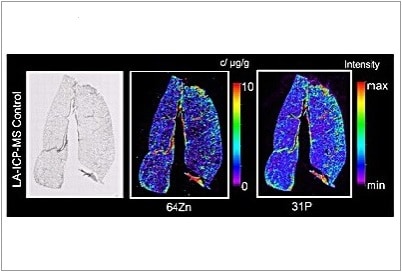
Bioimaging to determine the distribution of nanoparticles and phospholipids in lung tissue
Nanoparticles are widely used in our daily lives. The alveoli contains a certain amount of lung surfactant, including phospholipids and triglycerides, to allow for normal breathing and to reduce inflammation. The increase in lung surface active substances due to the inhalation of nanoparticles prevents the smooth exchange of oxygen and carbon dioxide, leading to lung disease. We observed the distribution of nanoparticles and phosphorus in lung tissue by LA-ICPMS imaging.
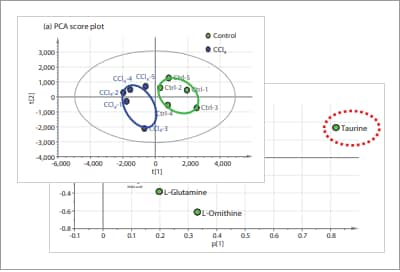
Direct Analysis of the Mouse Liver Metabolome
Probe electrospray ionization(PESI) is a new direct ionization method in which an ultrafine and minimally invasive probe is used for sampling. Acquired samples are ionized by applying a high voltage to the probe tip and therefore components can be analyzed without using a chromatograph. This articles introduces a method established to directly analyze the metabolome analysis of CCl4-induced acute liver failure model mice.