Nexis GC-2060 - Applications
Gas Chromatograph

Most of the documents on the LITERATURE is available in PDF format. You will need Adobe Acrobat Reader to open and read PDF documents. If you do not already have Acrobat Reader, you can download it free at the Adobe's Website. Click the GET ADOBE READER icon on the left to download a free copy of Adobe Acrobat Reader.
Pharmaceuticals
-
USP 467
Residual Solvent Analysis in PharmaceuticalsHeadspace sampling keeps the sample at a constant temperature and injects the vapor-phase components into the GC at a fixed volume. It is used to analyze the content and stability of residual solvents in solids and liquids. The HS-20 series’ multi-functional, user-friendly design supports a wide range of analyses — from research to quality control.
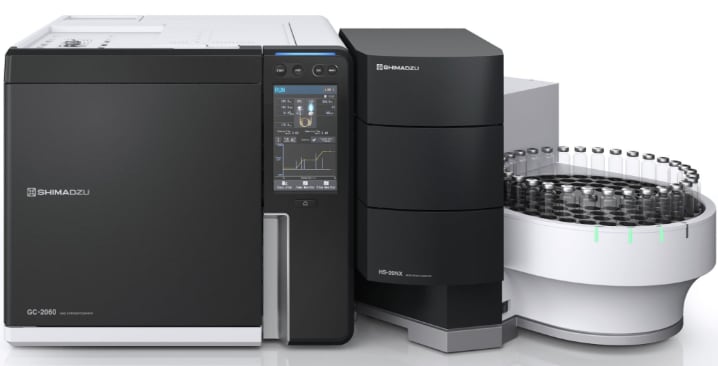
Nexis GC-2060 + HS-20 NX
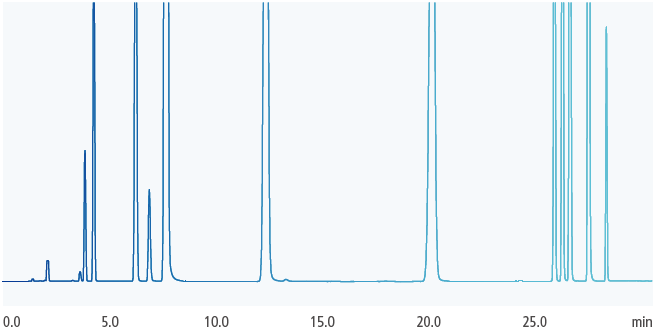
USP 467 Class 2A – Procedure A (Water-Soluble)
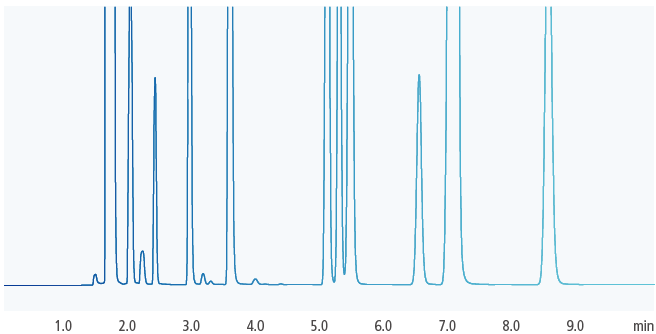
USP 467 Class 2A – Procedure B (Water-Soluble)
Food
-
Analysis of Odorous Compounds
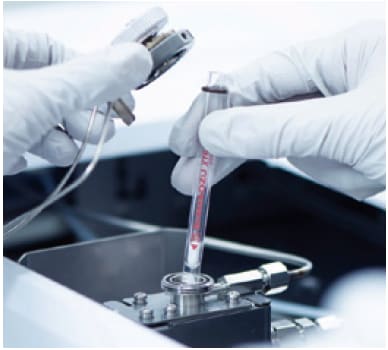
Using the Multi-Mode Injection Unit (MMI) and Thermal DesorptionMMI enables thermal desorption analysis without applying excessive heat to the sample during injection. By using a dedicated MonoTrap for extraction and concentration, even trace-level odorous compounds can be analyzed. This method allows for investigating the causes of odors by comparing different sample materials.
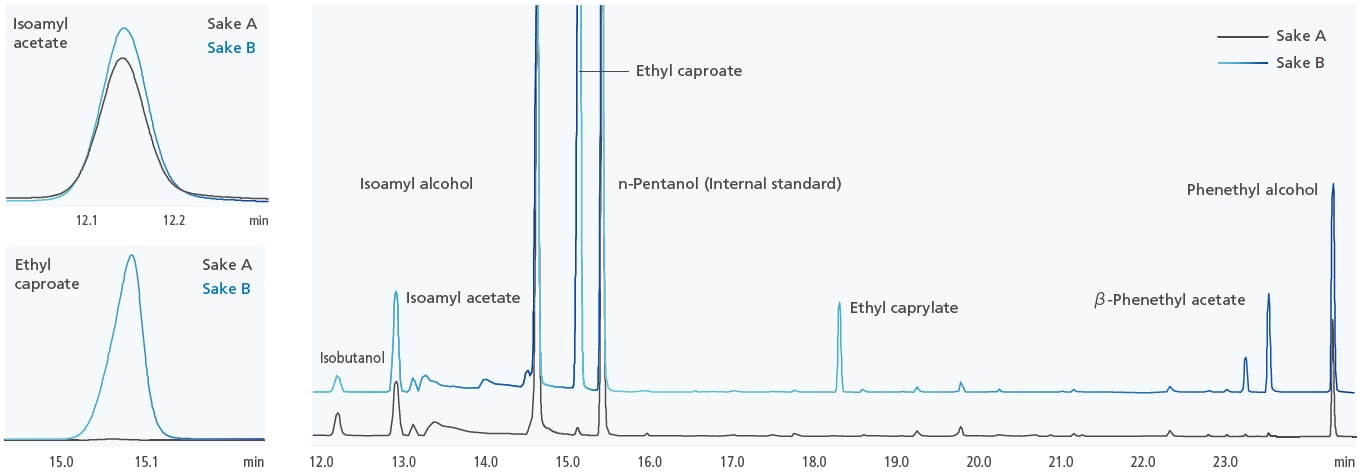
Comparison of Chromatograms of Aroma Components in Different Sake Samples During Heating
Energy
-
Dual-Line Gas Analysis
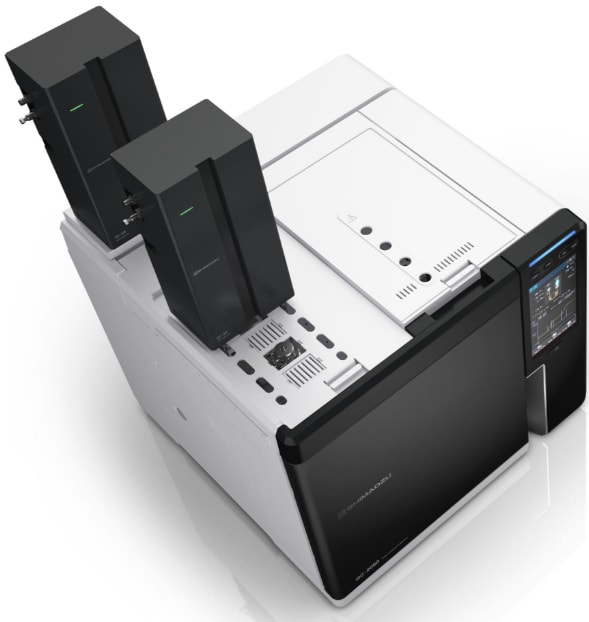
Using the GI-30 Auto Gas InjectorThe Nexis GC-2060 can be equipped with two GI-30 units to enable dual-line analysis.
This allows calibration curves for different concentration ranges to be created simultaneously, greatly reducing analysis time. Using separate columns for each line enables stable analysis even for components with significantly different concentrations. With the GI-30, precise measurements can be performed efficiently.
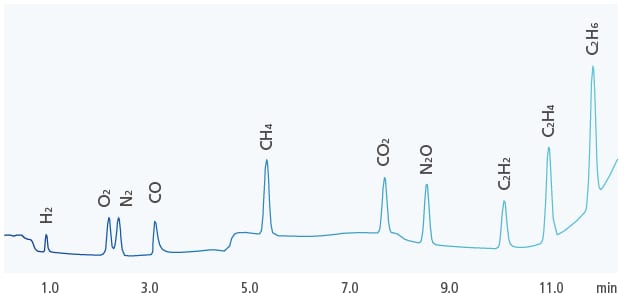
BID Detector Data (Helium Carrier Gas, 10 ppm for Each Component)
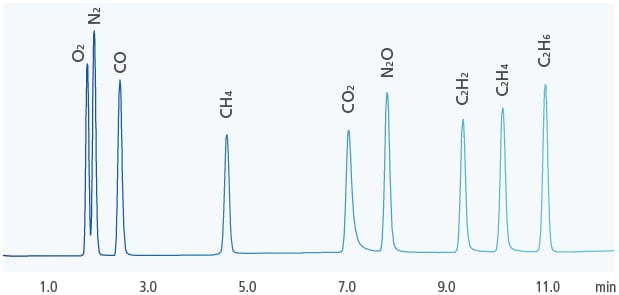
TCD Detector Data (Helium Carrier Gas, 1000 ppm for Each Component)
Environment
-
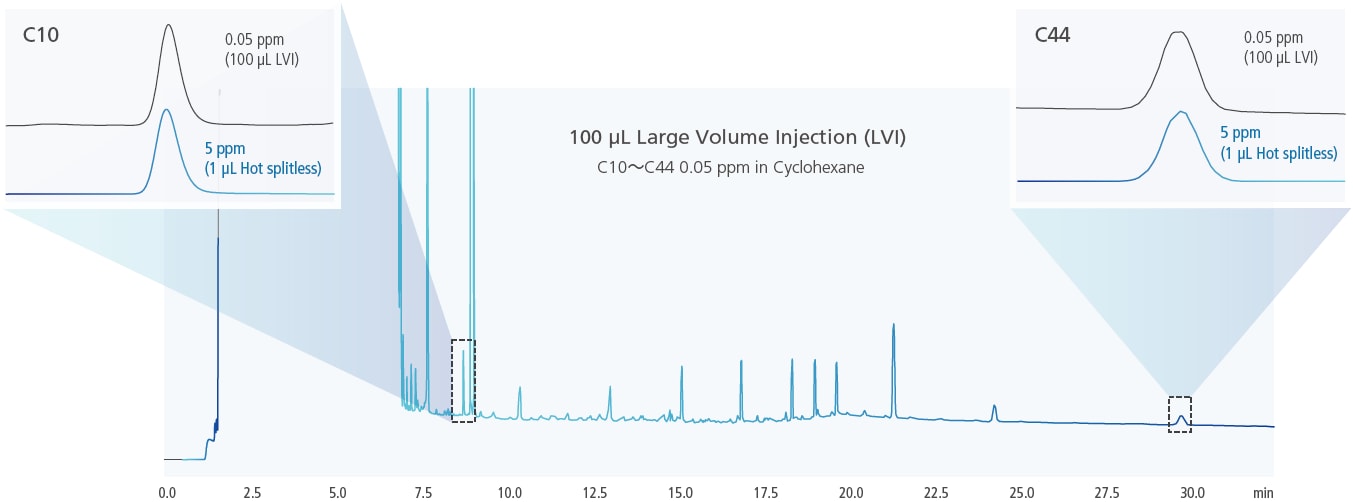
Large-Volume Injection Analysis of Environmental
Volatile Components
Using the Multi-Mode Injection Unit (MMI)The MMI can heat samples at up to 1200 °C/min, enabling rapid thermal desorption. Large-Volume Injection (LVI) is also supported by handling evaporation internally within the injection unit. This allows analysis of trace VOCs, such as benzene and toluene, even at very low concentrations. By using LVI, high-sensitivity analysis can be achieved without lengthy preprocessing steps.