


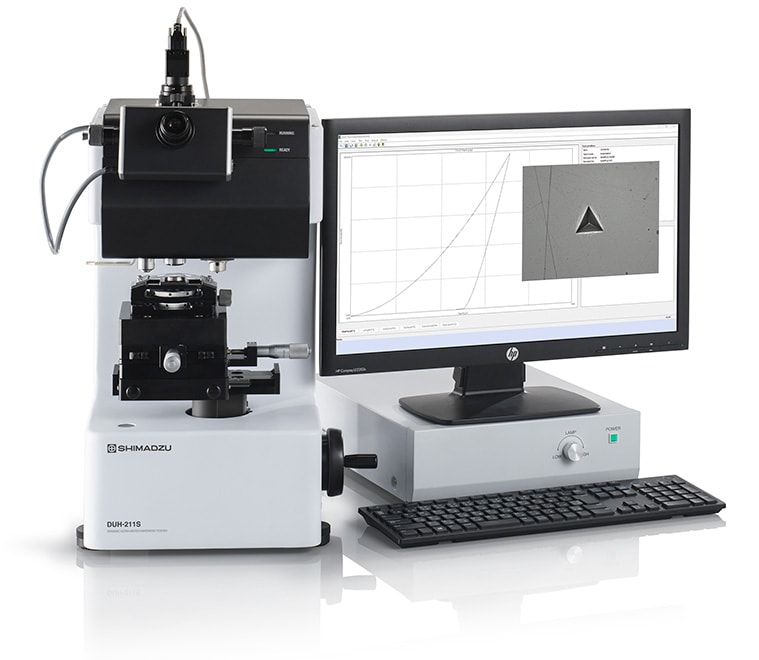
DUH-211/210 Series

Dynamic Ultra Micro Hardness Tester

DUH-211/210 Series

Evaluates hardness of a wide range of materials

Building on our experience with hardness evaluation technology for the micro range, we have taken our quest for greater precision and ease of use to the next level. Our hardness tester can measure the strength properties of material surfaces and microscopic materials using new evaluation methods specified in ISO standards.
Perform evaluation using the hardness and materials  parameters specified in ISO 14577-1 (Annex A) *1 .
It is possible to evaluate various plastics under the same  conditions and on the same scale using ISO/TS 19278 *2 .
Evaluation based on the Tangent Depth method*3 is also supported, using the indentation modulus EIT (hr) and the equivalent indentation Vickers hardness HVI (IW). 

  • ISO 14577-1
    Metallic materials - Instrumented indentation test for hardness and materials parameters - part1:Test method
    Annex A: Materials parameters determined from the force/indentation depth data set
    Standard used for new evaluation methods that continuously measure changes in test force and indentation depth which occur when an indenter is pressed into a material, and for the evaluation of material hardness and strength properties such as Young’s modulus and creep deformation.
  • ISO/TS 19278
    Plastics — Instrumented micro-indentation test for hardness measurement
    A standard for evaluating the hardness of various plastics on the same scale using instrumented indentation hardness so that the hardness of various plastics can be compared.
  • Tangent Depth Method is based on following papers.
    • Journal of Material Testing research Association of Japan Vol. 62 No. 2 April 2017, pp. 68–77
      Proposal for ISO 14577-Part 1: Test method (Verification of the calculation method of Young’s modulus for wide range of materials and test forces with already calibrated machine frame compliance in its testing system)
    • Journal of Material Testing research Association of Japan Vol. 65 No. 1 January 2020, pp. 4–17
      Calculation theory of the Equivalent Indenting Vickers hardness HVI (IW) and Implementation for many kinds of material and test force ranging from 10 mN to 1960 mN with Berkovich indenter in the Instrumented Indentation Test

Features

    • Evaluation of Hardness and Material Parameters in Accordance with Standards (ISO 14577-1 Annex A)
      Measure the behavior of a specimen as an indenter is pressed into it and evaluate the hardness, elastic modulus, and amount of work done during indentation, in compliance with ISO 14577-1 (instrumented indentation test for hardness) Annex A.
    • Evaluation of ISO/TS 19278 for Plastics
      Measure various plastics under the same measurement conditions in accordance with ISO/TS 19278. (DUH-210/210S)
    • Highly Precise Evaluation of Elastic Modulus
      Perform highly precise evaluation of the elastic modulus, using correction based on instrument rigidity and the shape of the indenter tip*4.
    • Low Test Force with Measurement Resolution of 0.196 µN
      Control the test force using a high resolution of 0.196 µN. This allows measurement of material strength properties in micro regions and in the outermost surfaces of specimens.
    • Ultra-Wide Test Force Range of 0.1 to 1,961 mN
      Use a wide test range of 0.1 to 1,961 mN for measurement, and test a variety of industrial materials, including rubber, plastics, and ceramics.
    • High-Precision Measurement of Indentation Depth
      No need to measure the actual indentation. 
      Specimen indentation depth can be measured in units of 0.0001 µm for depths up to 10 µm.
    • Supports a Wide Range of Testing Methods
      Record the relationship between the test force and the indentation depth. Test both the unload and load processes. Use the DUH-211/210 to perform cyclic load-unload tests and step load-unload tests.
    • Supports Vickers Hardness Test
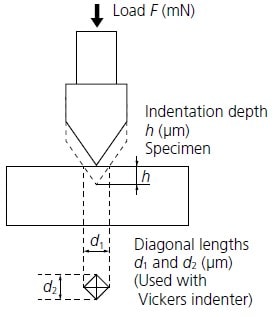
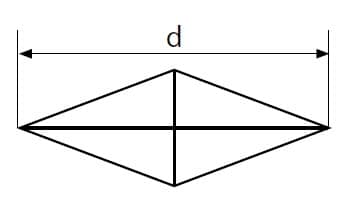
      A function to measure the length of diagonals is provided as a standard feature. This function allows you to measure the hardness that corresponds only to plastic deformation, Vickers hardness, and Knoop hardness. (Vickers and Knoop indenters are available as options.) Maximum microscope magnification is 500× (1000× is available as an option).
  • Indenter tip shape correction is only available for the 115-degree triangular pyramid indenter. Shape correction is not available for other indenters.

Measurement Principle

Electromagnetic force is used to press an indenter (standard type: 115° triangular pyramid) against a specimen. Pressing force is increased at a constant rate, from 0 to the preset test force. Indentation depth is automatically measured as the indenter is pressed against the specimen. This allows dynamic measurement of changes that occur in the specimen's resistance to deformation during the indentation process, and obtains a wide variety of data. During indentation the DUH-211/210 Series measures dynamic hardness and evaluates the hardness that corresponds to both plastic and elastic deformation. Also, if the indentation size is large enough to be observed with a microscope, hardness can be calculated using just the plastic deformation, by measuring the diagonal length of the indentation.

Expressions for Dynamic Hardness

    • 115° triangular pyramid indenter (standard): DHT115 = 3.8584×F /h2
    • 100° triangular pyramid indenter (option): DHT100 = 15.018×F / h2
    • Vickers indenter (option): DHV = 3.8584×F / h2
    • Knoop indenter (option): DHK = 1.5583×F / h2

      Even though the theoretical unit for these hardness expressions is kgf/mm2, it is normally not used.
  • Expressions for Dynamic Hardness

Expressions for Martens Hardness (ISO 14577-1 Annex A)

    • 115° triangular pyramid indenter (standard): HM115 = 1000 F / 26.43×h2 [N/mm2]
    • Vickers indenter (option): HMV = 1000 F / 26.43×h2 [N/mm2]

Hardness Expressions Based on Diagonal Length

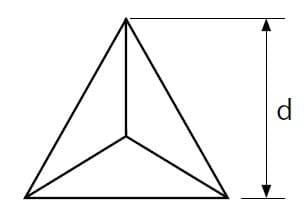
    • 115° triangular pyramid
      indenter
      (standard)
      HT115 = 160.07×F / d2
    • 100° triangular pyramid
      indenter
      (option)
      HT100 = 121.53×F / d2100° triangular pyramid
indenter
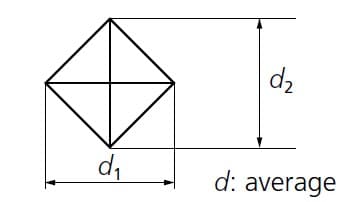
    • Vickers indenter (option)
      HV = 189.10×F / d2Vickers indenter
    • Knoop indenter (option)
      HK = 1451.1×F / d2Knoop indenter

Test Examples

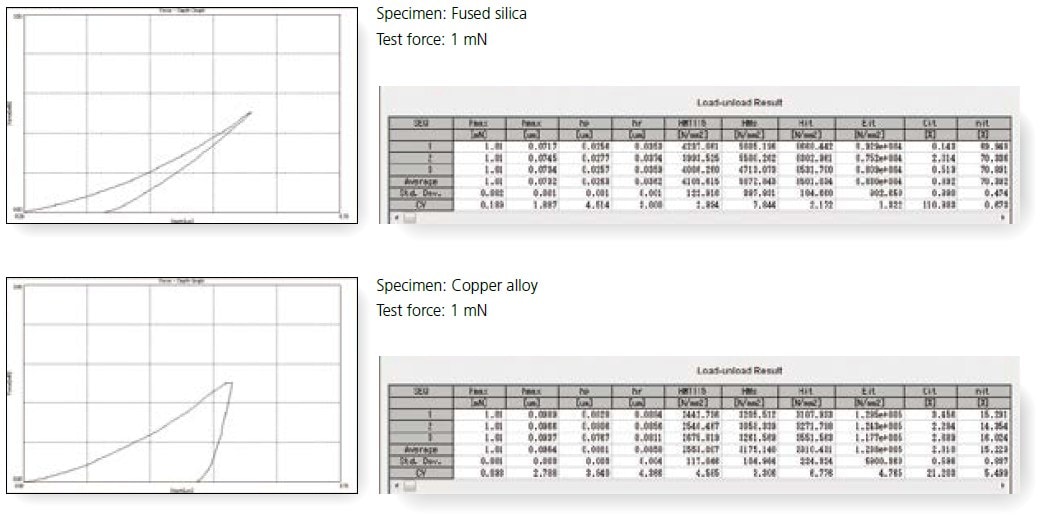
Test Examples

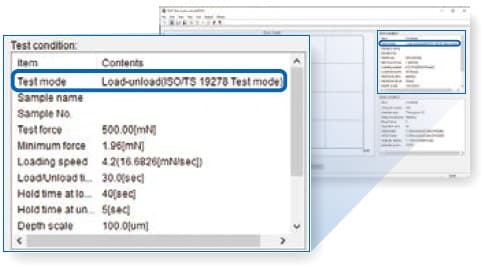
ISO/TS 19278 Compliant Evaluation (In the case of DUH-210/210S)

  • Unlike the conventional hardness test standards for plastics, it is possible to compare the hardness of various plastics from rigid plastics to semi-rigid plastics under the same conditions and at the same scale. The software provides a dedicated mode for easy testing.

    Test force: 500 mN
    Load/Unload time: 30 s each
    Holding time: 40 s
    Number of tests: 5 or more
    Hardness used for evaluation: HIT

  • ISO/TS 19278 Compliant Evaluation

Evaluation Using the Tangent Depth Method

Evaluation based on the Tangent Depth method is also supported, using the indentation modulus EIT (hr) and the equivalent indentation Vickers hardness HVI (IW). The Tangent Depth method is an analysis technique developed to provide results that more closely approximate the elastic modulus (Young’s modulus) obtained from tensile testing. By using the elastic modulus derived from tensile tests of bulk materials as a reference, this method enables easier comparison of the elastic modulus of plated layers and coating films. In addition, the Tangent Depth method introduces the concept of equivalent indentation Vickers hardness, which was developed as a converted hardness value that provides better agreement than conventional methods for thin specimens where standard Vickers hardness testing is difficult to apply.

Data Processing

Simply set the required items to obtain the desired information.

  • Data Processing Items
    Results display Graph output for depth squared and test force
    Data output for test force and depth Hardness calculation based on preliminary test force
    Graph output for test force and depth Graph output for hardness and parameters
    Graph output for hardness and depth Calculation of converted hardness values
    Graph output for hardness between 2 points and depth Repeated changes of surface detection points
    Graph output for depth and time Calculation of elastic modulus
    Graph output for hardness and test force ASCII file output
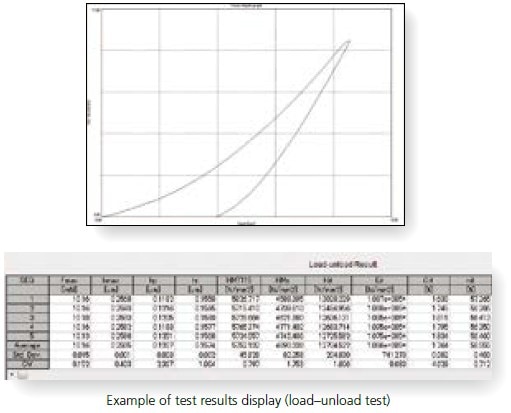
  • Example of test results display (load–unload test)
{"title":"Downloads","description":"Download the latest brochure.","source":"product","key":3462,"max":30,"filter_types":["brochures"],"link_title":"View other Downloads","link_url":"","pdf_links":[]} {"title":"Applications","source":"product","key":3462,"max":3,"filter_types":["applications","application_note","posters"],"link_title":"Learn more","link_url":"\/an\/products\/materials-testing\/hardness-testing\/duh-210duh-210s\/applications.html","config_list":[{"document_id":12617,"config_id":304},{"document_id":13171,"config_id":299}],"page_links":[],"column_title":"Documents"} {"title":"Technical Documents","source":"product","key":3462,"max":3,"filter_types":["technical","technical_reports","white_papers","primers"],"link_title":"Learn more","link_url":"\/an\/products\/materials-testing\/hardness-testing\/duh-210duh-210s\/applications.html#table_anchor_technical","config_list":[],"page_links":[],"column_title":"Documents"} {"title":"Manuals","source":"product","key":3462,"max":3,"filter_types":["manuals"],"link_title":"Learn more","link_url":"\/an\/products\/materials-testing\/hardness-testing\/duh-210duh-210s\/applications.html#table_anchor_manual","config_list":[],"page_links":[],"column_title":"Documents"}

News / Events

Learn more