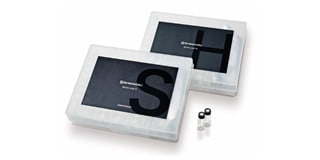
Shim-vial™ H glass, S glass
Shimadzu provides high-quality vials that thoroughly eliminate these risks by visually inspecting each vial, allowing them to be used with confidence.


Vials & Accessories
In the field of chromatography, vials are essential containers for holding liquid and solid samples for analysis. Vials and accessories, including vials, caps, septum and inserts are used across chromatography systems comprising high-performance liquid chromatographs (HPLC), liquid chromatography mass spectrometry (LCMS), gas chromatography (GC), gas chromatography mass spectrometry(GCMS) and total organic carbon (TOC) instruments.
Vials for these specific instruments and processes come in a range of sizes, configurations and materials, including glass and polypropylene. As with all elements of your instrument, it’s important to choose high-quality vials and accessories in order to ensure accurate, contamination-free analysis. Shimadzu is a trusted provider of state-of-the-art vials and accessories to ensure high performance across a range of applications.
LC/LCMS vials are sample vials designed for both routine liquid chromatography (LC/HPLC) and high-sensitivity LC-MS workflows. Made from clear or amber borosilicate glass (with polypropylene options, too), these vials are available in 1.5mL and 4mL standard configurations. They are compatible with SIL series autosamplers (SIL-20, SIL-30, SIL-40) and there are options for screw caps, snap caps and crimp caps with various septa. For mass spectrometry applications, choose low-adsorption type to guarantee consistent quality and reliability for sensitive anlayses.
These are ultra-clean, certified carbon-free specialized vials for TOC analysis. Available in various volumes, they must meet stringent cleanliness requirements to optimize precision in all analyses.
GC/GCMS vials are heat-resistant for gas chromatography. Compatible with AOC series autosamplers, these vials are available in screw-top and crimp-top configurations.
You’ll find the following cap and closure options for chromatography vials:
You can choose septa made in the following materials:
When the sample volume is less than 1mL, vial inserts or integrated vials are essential. These vials with a flat-bottom and conical design feature an insert adhered inside to ensure liquid levels are high enough to be aspirated by an autosampler, thereby improving autosampler needle accuracy.
Other accessories you may want to incorporate into your chromatography processes include:
Chromatography vial size is determined by your sample volume and autosampler compatibility. Standard sizes include 1.5mL vials (most common for HPLC autosamplers), 2mL vials (alternative for larger volumes), and 4mL vials (used for cleaning solvents or larger sample volumes). For sample volumes less than 500 µL, use vial inserts within standard vials to ensure proper needle depth and aspiration. Check your autosampler specifications (SIL-20, SIL-30, SIL-40 for HPLC and, AOC series for GC) for compatible vial dimensions.
Choosing between screw-cap and crimp-cap vials will come down to the needs of your analysis. Screw-cap vials offer convenience and reusability, making them ideal for routine HPLC analysis with non-volatile samples. Crimp-cap vials provide superior seal integrity and are required for headspace analysis, volatile compound analysis, GC applications and long-term sample storage. For a middle ground between the two, consider snap-cap vials, which streamline preparation for high-throughput labs. For LCMS work, low bleed pre-assembled screw caps with certified septa are commonly used to minimize contamination.
TOC vials are ultraclean, carbon-free vials specialized sample vials designed for total organic carbon (TOC) analysis. Due to the nature of TOC analysis, they are manufactured and cleaned to be completely free of organic carbon contamination and come with certificates of cleanliness. Because even minute levels of contamination can impact results, TOC vials are essential when measuring trace levels of organic carbon in water samples, when conducting pharmaceutical water quality testing, or environmental water analysis. Regular chromatography vials contain too much background carbon for accurate TOC measurements, which is why you need specific TOC vials for this approach to analysis.
Choosing the right septa for vials comes down to the application. The septa you use can impact sample evaporation and security, needle bending and blockages, as well as instrument downtime, which is why it’s important to choose wisely. Silicone/PTFE septa are the most common, offering good chemical resistance and resealing properties for re-injection. There are also pre-slit septa, which reduce injection force and needle damage but may have slightly lower resealing ability. If you’re using GC-MS and LCMS instrument, low-bleed septa are essential to minimize background contamination. And, for headspace GC or volatile analysis, use thicker, high-temperature septa. It’s also important to match septa material to your solvent system. For example, if you’re using aggressive solvents, PTFE-faced septa provide better chemical resistance.
Vial inserts (also called vial microinserts) are small glass tubes placed inside standard HPLC autosampler vials to reduce the effective volume and concentrate samples at the bottom. If you’re working with samples under 500 µL, use vial inserts to ensure the autosampler needle can reach and aspirate the liquid without waste. You’ll also be able to mitigate needle damage by choosing flat-bottom inserts. Inserts are compatible with both 1.5mL and 2mL screw-cap or crimp-cap vials.
Many Shimadzu chromatography vials follow industry-standard dimensions (12mm x 32mm for 1.5mL vials, for example) and are compatible with autosamplers from other manufacturers with the same specifications. However, some features, like vial height, thread type, and cap design, may vary. For optimal performance and to avoid instrument damage, always verify dimensional compatibility with your specific autosampler model or use manufacturer-recommended vials.
Filters
Showing 1 - 6 of
6Shim-vial™ H glass, S glass
Shimadzu provides high-quality vials that thoroughly eliminate these risks by visually inspecting each vial, allowing them to be used with confidence.
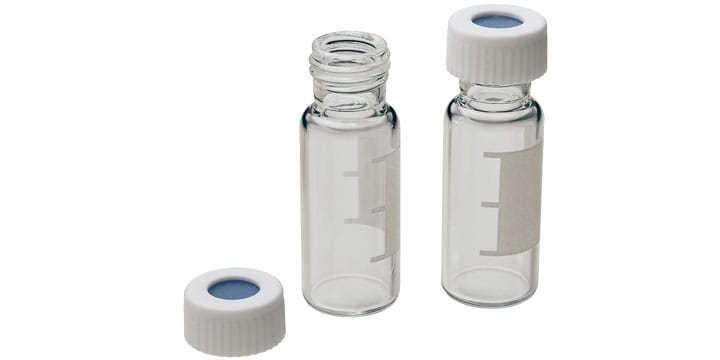
Vial and Crimper
Our lineup includes vials for liquid autosamplers and headspace samplers, as well as manual and motorized crimpers.
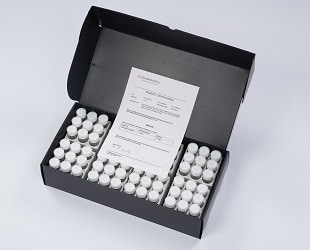
CQ Vial for TOC
A warranty card is included declaring that the elution of organic impurities into the vial is less than 10µ gC/L.
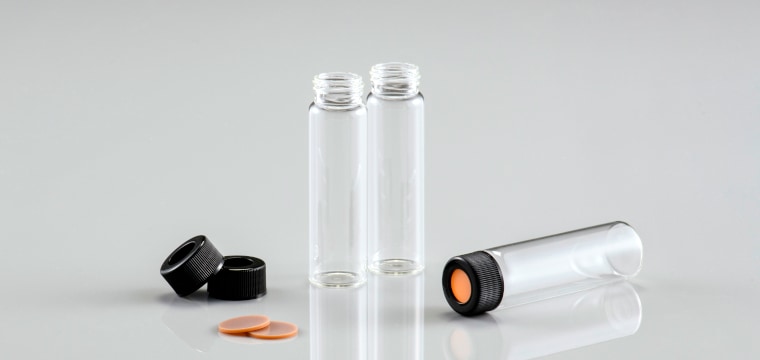
Shimadzu 40ml vial LE for TOC
Shimadzu 40 mL vial LE (Low Elution) for TOC analyzers aims for the manufacturing quality standards of the manufacturers of TOC analyzers. This vial can be used in autosamplers (ASI-L or ASI-V) for laboratory TOC analyzers (the TOC-L or TOC-V series).
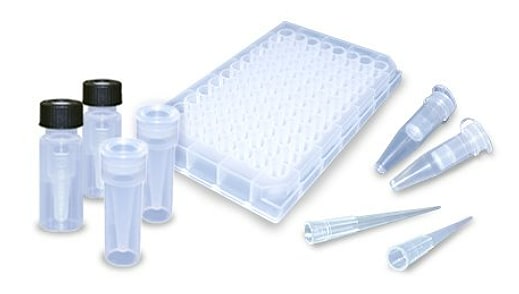
TORAST ™-H Series
LC/MS(/MS) has been introduced in many fields as an indispensable separation analysis method thanks to its high sensitivity and selectivity.
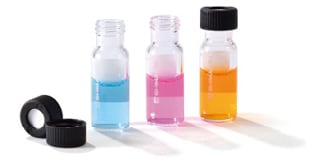
LabTotal Vial
Reduces the Adsorption of Basic Compounds on the Surface of the Glass Vial
Shimadzu Corporation has released LabSolutions Detect, a software with AI Functionality to support Anomaly Detection for Liquid Chromatographs (LC).
LabSolutions Detect transforms your LC data review process by visualizing differences between accumulated reference data and daily sample data.
Shimadzu has released the Column Management Platform, iCMP.
Correctly managing the usage logs for columns is indispensable for improving the reliability of data. By combining Column Manager (a database), a special scanner, and 2D code labels (iCMP tags), the intelligent Column Management Platform (iCMP)*1 automatically links information on used columns and analysis reports automatically.
Enhancing Selectivity in Reversed-Phase Analysis Through Effective Utilization of Mobile Phase pH
When analyzing ionizable compounds, the pH of the mobile phase plays a crucial role in improving peak shape and separation. However, conventional silica-based columns have limitations in utilizing high-pH mobile phases. Additionally, while polymer-based columns can operate across a wide pH range, they have drawbacks such as lower mechanical strength and column efficiency. In this technical report, we present examples of measurements conducted using mobile phases with various pH levels, employing the Shim-pack Scepter and Shim-pack NovaCore columns—organic silica hybrid columns that combine the advantages of silica-based columns with exceptional high-pH durability.
Core-shell Column: Analysis Basics Now Available.
Discover easy-to-understand insights into the fundamentals of analysis.