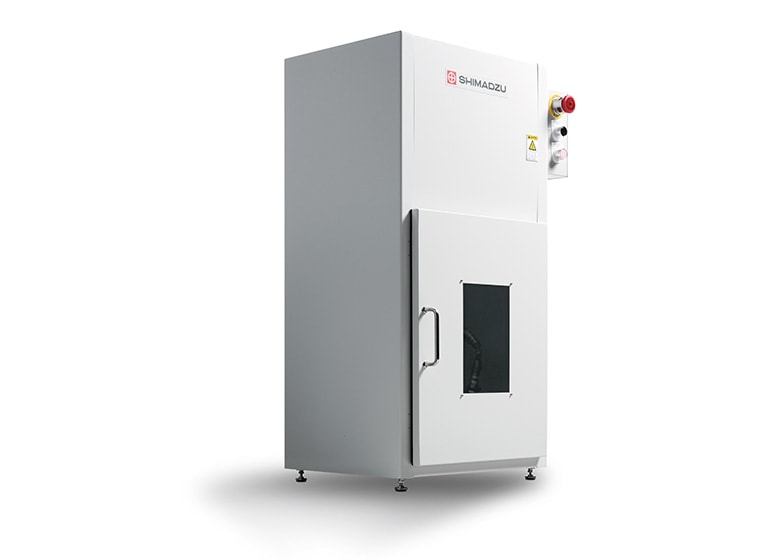
USF-2000A


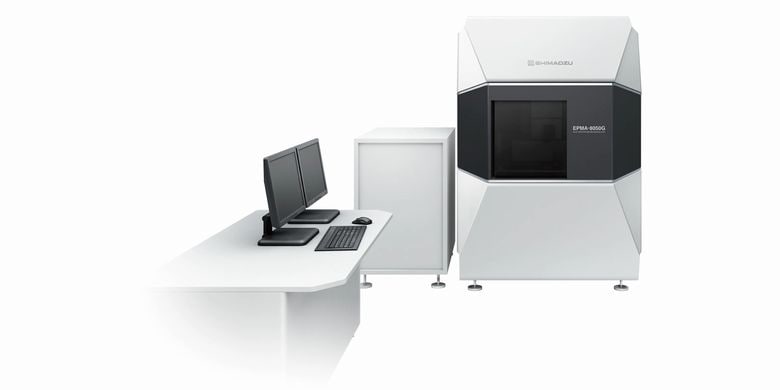
Ultrasonic Fatigue Testing System USF-2000A, Electron Probe Micro Analyzer EPMA-8050G
Generally it is known that with most structural metal materials the fatigue strength lowers until a load is applied 106 times, and from 107 times onward the fatigue limit is reached, at which no fatigue fracture will occur. However, it is also revealed that with high-strength metal materials that are hardened or surface treated, internal inclusions become an origin of a fatigue fracture and cause a fracture even at 108 to 109 cycles. When a fracture occurs from the inside, it is considered that the fatigue strength depends on the size and kind of internal inclusions. Consequently, to evaluate the fatigue strength of high-strength metal materials, it is important to know the size and kind of inclusions present in the metal materials. There are some methods for inclusion detection, such as mirror polishing and observing the surface of the specimen; however, no one can tell whether a fatigue fracture starts from the detected inclusion. Therefore, to detect inclusions which lead to an internal fracture, it is best to actually carry out a fatigue test. However, a fatigue test exceeding 109 loading cycles at 10 Hz will take approx. 3.2 years. The ultrasonic fatigue testing system used for this experiment enables testing at a frequency of 20 kHz, achieving a test with 109 cycles in about 14 hours. Such a system is very effective to detect internal inclusions through actual fatigue testing. In this experiment, we performed the detection of inclusions in an SNCM439 specimen using the ultrasonic fatigue testing system, USF-2000A, and observed the inclusions using the electron probe micro analyzer, EPMA, to identify their elements.
August 3, 2017 GMT