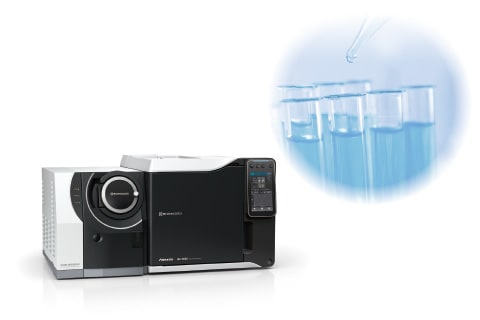
GCMS-TQ RX Series


- An Application to the Research of the Intestinal Environment -
The human intestine harbors over 100 species of bacteria with a total of approximately 100 trillion bacterial cells, creating a complex intestinal microbiota. Studies in recent years have revealed that intestinal bacteria may be beneficiary to the host by contributing to health preservation and promotion. This has raised the attention on researches regarding the intestinal microbiota. In the field of medicine, researches are investigating the relationship of the intestinal microbiota with diseases such as colorectal cancer as well as the effects on drug efficacy and the immune system. In the field of foods, there are studies aiming to verify the health effects of lactic acids in functional foods. As a means to reveal the effects of the intestinal microbiota on the host, next-generation sequencing is used to analyze the species and distribution of bacteria in the microbiota. Another method gaining attention in recent years is metabolomic analysis using a mass spectrometer for a comprehensive analysis of the metabolites produced by the intestinal microbiota. This is because it is considered that some of the metabolites produced by the intestinal microbiota are absorbed by the intestinal tract, taken into the bloodstream, and then circulated through the entire body. Metabolomic analysis using a mass spectrometer generally employs a gas chromatograph mass spectrometer (GC-MS) or a liquid chromatography mass spectrometer (LC-MS) to comprehensively measure the metabolites (the metabolome) within a sample. It is necessary to select either a GC-MS or an LC-MS as appropriate for the target compound and the measurement purpose. A GC-MS features excellent robustness, and although derivatization is required for hydrophilic metabolites such as amino acids, organic acids, and sugars, it can comprehensively measure several hundred compounds in one measurement. An LC-MS on the other hand does not require derivatization. Capable of efficiently measuring specific metabolites (up to 100 compounds), it is optimal for the routine measurement of specific compounds. This article introduces a method for the comprehensive measurement of the primary metabolites in mouse feces using GC-MS/MS and LC-MS/MS.
November 5, 2018 GMT
Some products may be updated to newer models