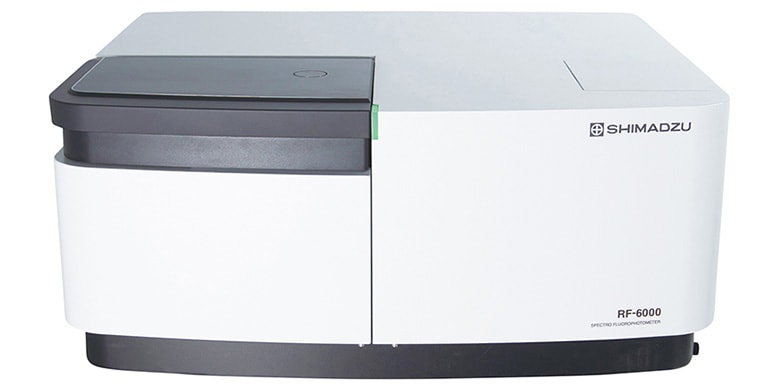
RF-6000


Spectrophotometric Analysis
Petroleum based fuels include gasoline, diesel, kerosene, and fuel oil. These fuels are refined according to their boiling point differences and are used in various applications all around us. In Japan, the fluorescent substance coumarin is added to kerosene (and A-type fuel oil), and the Japan Petroleum Institute established standard JPI-5S-71-2010 (abbreviated to JPI method below) as a technique for quantitative analysis of coumarin. However, when the JPI method is used for gasoline, it is reported that a substance contained in gasoline exhibits fluorescence similar to coumarin. This substance is suggested to be N,N'-Bis (salicylidene)-1,2-propanediamine (abbreviated to BSPD below), and it has also been shown that performing an appropriate pretreatment could reduce the fluorescence of BSPD. Since fluorescence depends on the molecular structure of the substance, it is conceivable that the pretreatment changes the molecular structure. This article introduces a comparison between the fluorescence intensities obtained with and without pretreatment, which changes the molecular structure of BPSD, using the RF-6000 spectrofluorophotometer and coumarin analysis kit for respective measurements.
May 17, 2017 GMT