
LC/MS/MS MRM Library for Phospholipid Profiling


Liquid Chromatography Mass Spectrometry
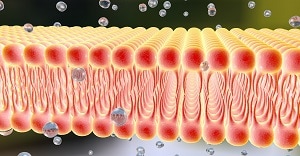
The lipid bilayer membrane structure of cell membranes is formed of phospholipids, with fatty acid chains oriented inside the membrane and polar groups situated on the membrane surface. Precursors of physiologically active lipids bound to phospholipids as fatty acids include polyunsaturated fatty acids such as arachidonic acid, EPA, and DHA. These lipids contribute to the formation of a wide variety of membrane structures. Due to recent reports of a causal association between phospholipid compositions and various diseases, phospholipid profiling techniques have gained interest as an important approach in disease marker screening and disease mechanism identification. Shimadzu has created a phospholipid profiling LC/MS/ MS MRM library for the classification of phospholipids in biological samples. Phospholipids are divided into glycerophospholipids and sphingophospholipids. Qualitative analysis of phospholipids by MS/MS involves phospholipid classification via the detection of product ions created by polar group elimination, such as choline and ethanolamine elimination, and subsequent phospholipid structure prediction based on molecular ions. The Shimadzu MRM library includes 422 constituents (1st method), and the phospholipid targets of the library are phosphatidylcholines (PC), phosphatidylethanolamines (PE), phosphatidylserines (PS), phosphatidylglycerol (PG), phosphatidylinositol (PI), and sphingomyelins (SM). A single chromatographic analysis can be used to profile 422 phospholipid constituents. The MRM library also includes 867 MRM transitions that are needed to determine the fatty acid composition. The phospholipid profiling workflow begins with the 1st method, after which the 2nd method is performed if the fatty acid composition analysis is needed. Shimadzu has also created the MRM Event Link Editor that edits MRM methods, and is needed to create a 2nd method from the 867 MRM library transitions. The library allows for easy phospholipid profiling with a triple quadrupole mass spectrometer, and stress-free fatty acid composition analysis.
October 17, 2016 GMT
Some products may be updated to newer models