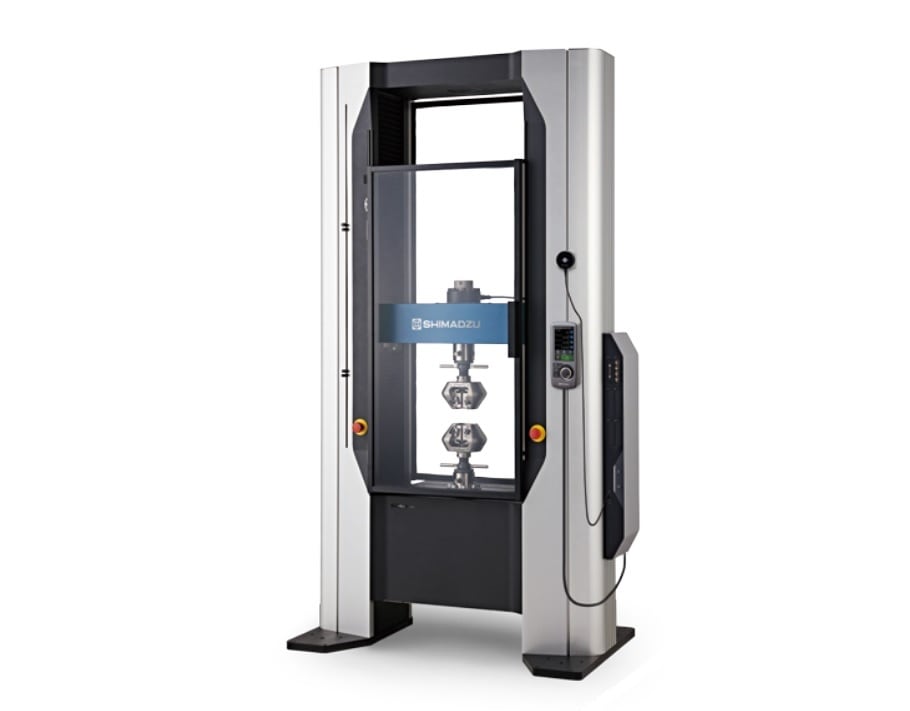
AUTOGRAPH AGX™-V2 Series


Lithium-ion secondary cells, also called rechargeable batteries, (referred to here as "lithium-ion batteries") are widely used as energy sources for information terminals and consumer electronics, etc. because of their high energy density and cell voltage. Recently, their growing rate of dissemination into areas of general household applications, including hybrid and electric vehicles, is quite evident, and it appears obvious that the demand will further increase in the future. Because lithium-ion batteries can sometimes become unstable due to short-circuit, over charging and discharging, impact, etc., a variety of protection mechanisms are incorporated at the battery component level to ensure safety. Of these component parts, the lithium-ion battery separator prevents contact between the positive and negative electrodes, while at the same time playing a role as a spacer which permits the passage of lithium ions. However, it also performs the function of preventing a rise in battery temperature due to excessive current in the event of a short circuit. Because the lithium-ion battery separator is set in place so that it comes into contact with the rough surfaces of the positive and negative terminals, high mechanical strength is required. This mechanical strength must be maintained even if there is some rise in temperature, which is common to some degree, for example, during battery charging. Therefore, we conducted piercing and tensile testing measurements of the separator to evaluate changes in strength with respect to changes in temperature. This document introduces actual examples of these tests.
January 27, 2012 GMT