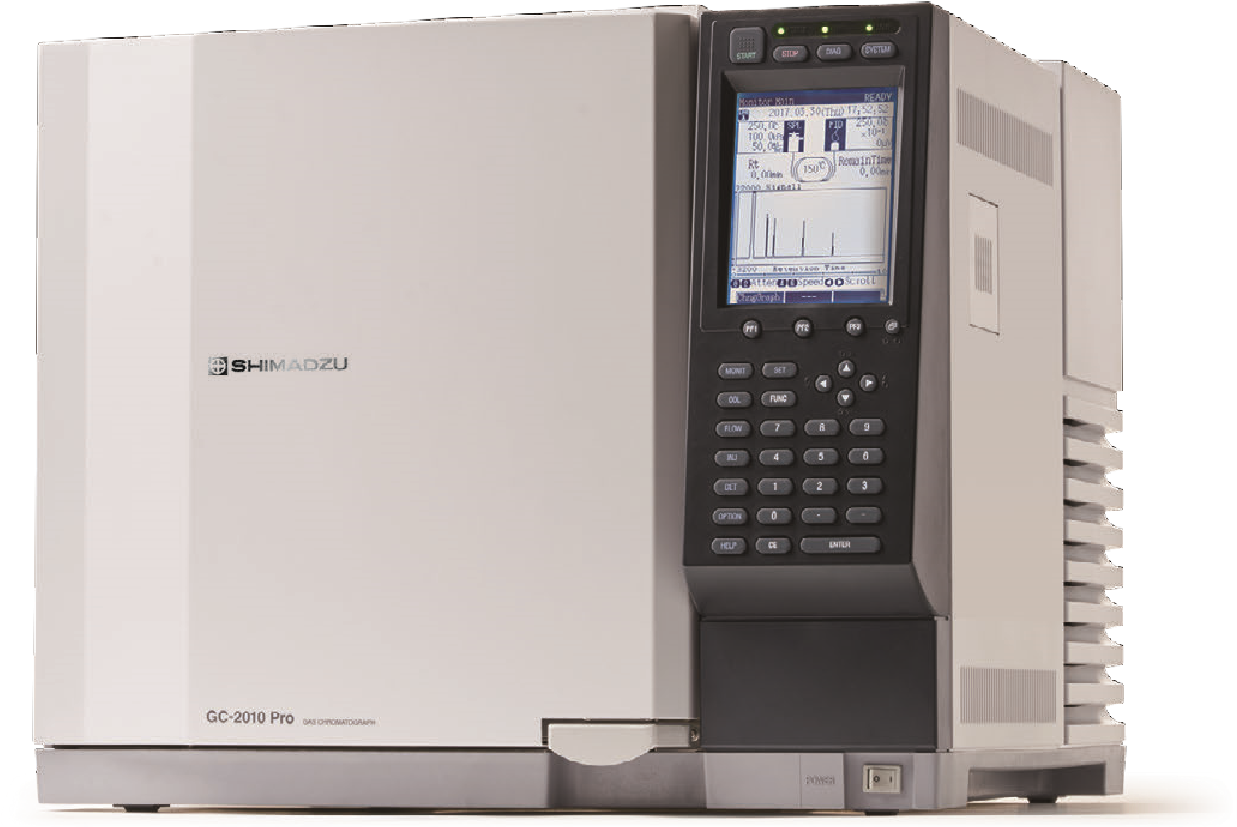
GC-2010 Pro


The rising price of petroleum-based oil increases the world’s interest in alternative fuels. Biodiesel is one of the more popular alternative fuels. The interest in biodiesel arises partly due to the fact that it is a renewable fuel source. Pure biodiesel is basically a group of compounds called Fatty Acid Methyl Esters (FAME), which is made from plant oils or animal fats through a process called transesterification. In transesterification, the triglycerides from these natural oils are reacted with an excess amount of methanol in the presence of a catalyst. In Europe and in the United States, there are standards that specify the minimum purity of, or the maximum levels of contaminants in, a pure biodiesel (called B100) before it can be deemed suitable for use as an automotive fuel. EN 14214 and ASTM D6751 are two documents that describe the standard specifications that a pure biodiesel must meet before being used as fuel. These standard documents also specify the analytical methods that can be used to test the purity of, or the impurity levels in, a biodiesel. Gas chromatography (GC) is one technique that can be used to test three of the specifications of a pure biodiesel, namely: 1) the FAME contents; 2) the total gycerol contents; and 3) the methanol content. The amount of methanol in a biodiesel can be easily determined by using gas chromatographic (GC) method coupled with headspace extraction/sampling technique. EN 14110 standard method describes the procedure for this analysis. Here we describe the analysis of methanol in a palm olein biodiesel by using Shimadzu GC-2010 and AOC-5000 headspace autosampler.
October 8, 2008 GMT