
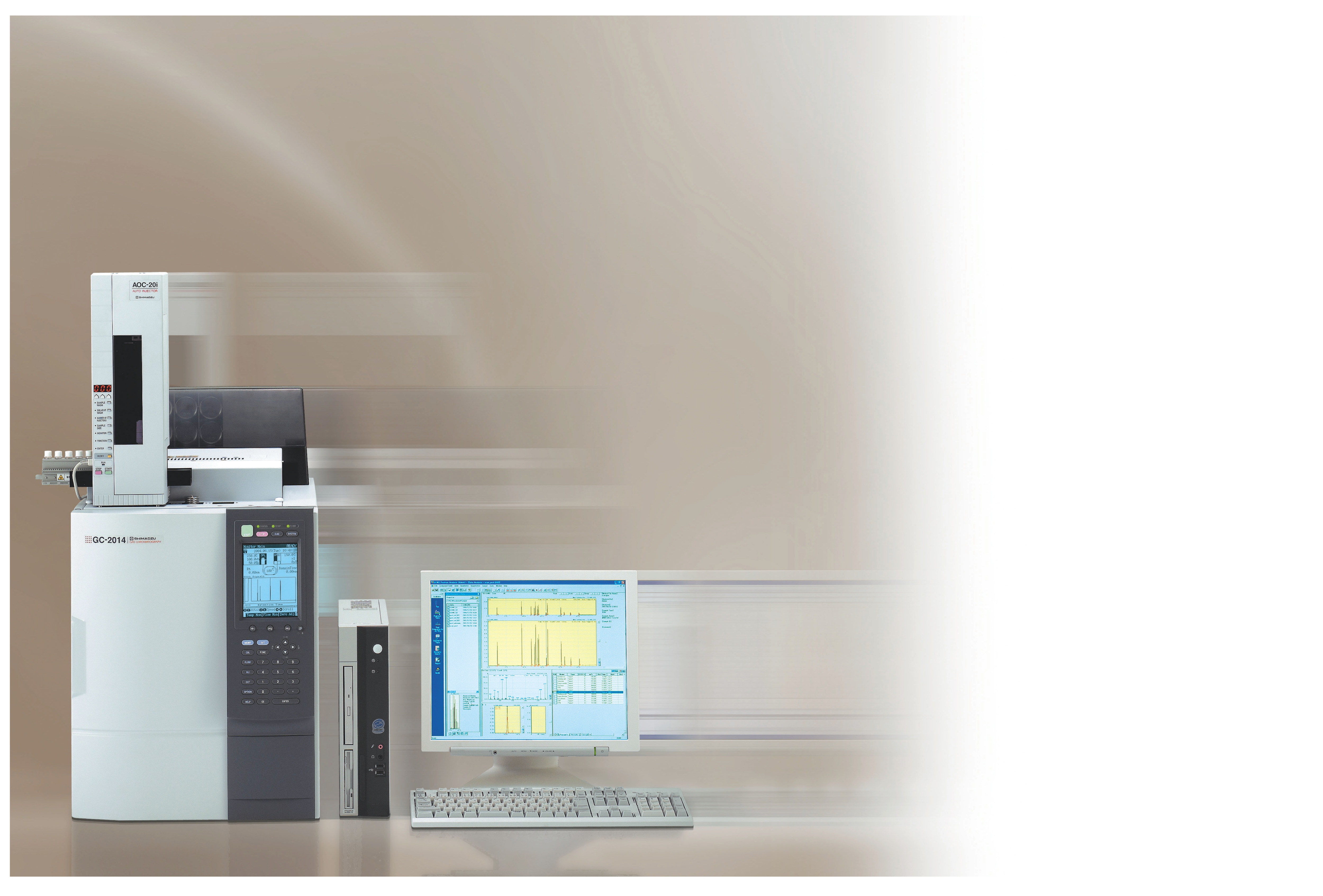
GC-2014


GAS CHROMATOGRAPHY
In GC analysis using the FPD, if hydrocarbons and other foreign components are eluted in large quantity, a phenomenon known as quenching can occur. When quenching occurs, the effect is seen in the chromatogram, in which the response of the co-eluting compound fluctuates and a normal response cannot be obtained. In analysis of samples containing large amounts of hydrocarbons with trace amounts of sulfur components, as in the case of gasoline, it has been assumed that the analysis is difficult because the separation is difficult. We introduce here an application in which the FPD-2014, with its redesigned FPD nozzle to accommodate both packed and capillary columns, was used along with optimization of the flow ratio of the combustion gases to investigate the reduction of quenching in analysis of a trace amount of a sulfur compound in gasoline.
April 25, 2005 GMT