
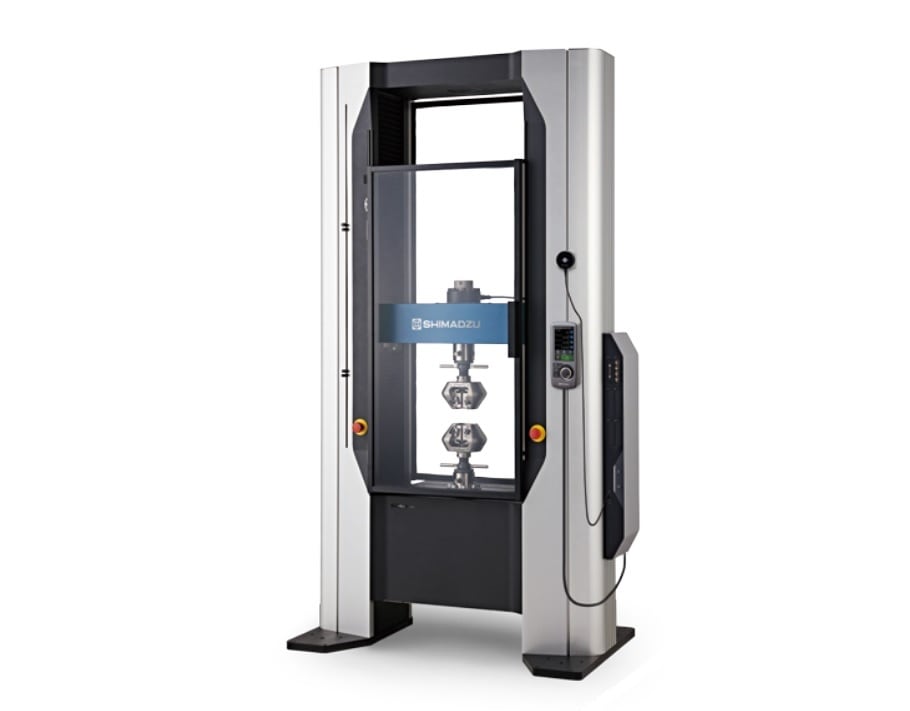
AUTOGRAPH AGX™-V2 Series


Cellulose is the main component of plant cell walls and fibers. It is also the most abundant carbohydrate on earth and has been used as a raw material for paper and cotton since antiquity. Recently, cellulose nanofiber (CNF) has been the focus of attention as a new material in which the functionality of cellulose is enhanced by defibration to the nano level. CNF has ”5 times the strength of steel while weighing only 1/5 as much”, and also has numerous other desirable properties, including “transparency,” “low thermal expansion and high heat resistance,” “gas barrier property,” and “thickening property and thixotropy,” and as a plant-derived substance, it is also a low environmental impact material. For these reasons, it has attracted interest as a new material following carbon fiber. In particular, in the transportation equipment field, light weight components fabricated with CNF combined with resin are of interest when applied to the automotive field, as they contribute to CO2 emissions reduction. However, considering the environments in which automobiles are used, it is necessary to clarify the material properties of CNF not only at room temperature, but also across a wide temperature region from low to high temperatures. In this article, bending tests were conducted to evaluate the temperature dependence of flexural strength and the flexural modulus of nylon 6 (PA6) strengthened with CNF and with glass fiber (GF).
December 10, 2020 GMT


