
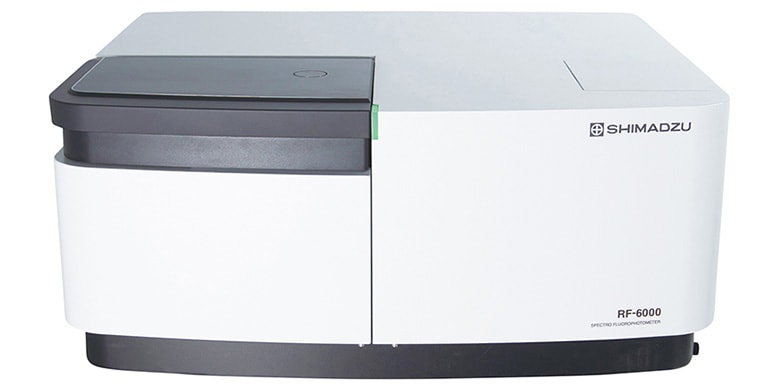
RF-6000


Cellulose is a polysaccharide that is the primary component of plant cell walls. Cellulose that is fibrillated down to the order of nanometers is called nanocellulose and of such nanocelluloses, those that have a high aspect ratio (100 or higher) with a width of 4 to 100 nm and a length of a few μm are called cellulose nanofibers (CNFs). CNFs are gaining attention as state-of-the- art biomass material. There are generally two types of CNFs: monodisperse CNFs and networked CNFs. Monodisperse CNFs have a width of approx. 3 to 5 nm and each fiber is dispersed. They are therefore transparent and can easily be added functions such as water-resistance and enzymatic barriers. Networked CNFs on the other hand are larger with a width of approx. 20 to 100 nm and only require mechanical fibrillation to make. They feature easy adhesion with resins and also easy processing. Regarding monodisperse CNFs, an evaluation of dispersibility is introduced in Application News No. S31. This article studies the dispersibility and function group information of networked CNFs. The measurement samples are CNFs (wood-derived etc.) purchased from Sugino Machine Ltd., and fermented nanocellulose (product name: Fibnano) provided by Kusano Sakko Inc., and Prof. Kenji Tajima of Hokkaido University. We also evaluated the optical properties of CNF film purchased from Sugino Machine Ltd., the results of which are also introduced in this article.
October 12, 2018 GMT