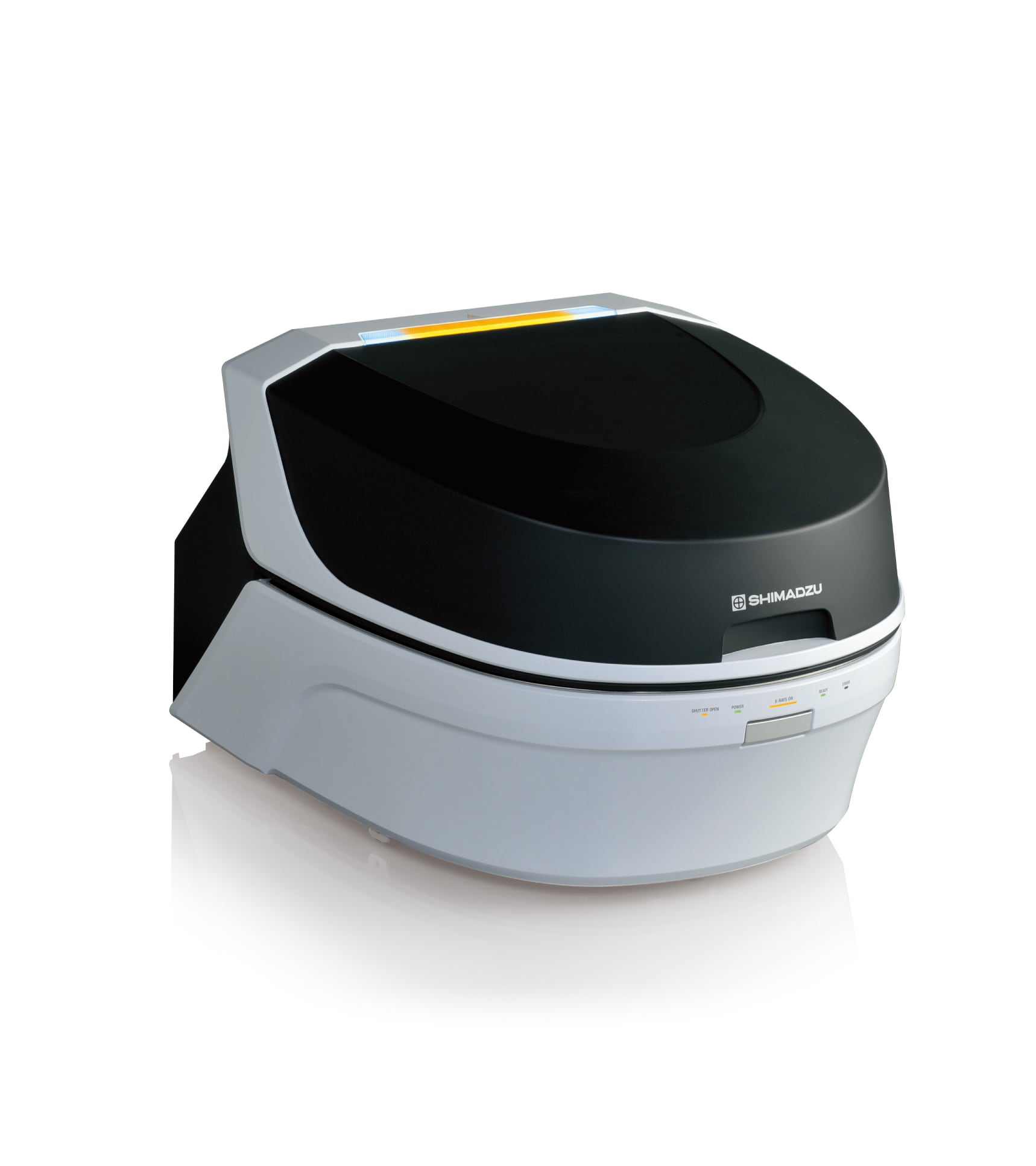
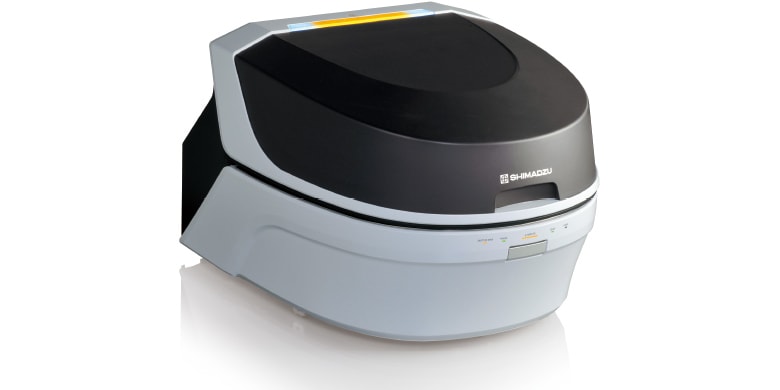
EDX-7200


- Chemical pretreatment of APIs is not necessary and measurement of samples as little as 0.1 g is possible. - Unlike ICP-MS which requires complicated sample preparation, EDX requires minimal sample preparation. - Various applications such as analysis of residual catalysts, drug salts, and contaminants are possible using EDX.
Elemental analyses are carried out for various reasons during API development and manufacturing processes. For example, in the development stage, quick and simple analysis of target elements in drug salts and elements regulated in ICH Q3D(1) and Japanese Pharmacopoeia (2) is required. During acceptance and pre-shipment testing, there is also a need to check for contamination that may have occurred during the manufacturing process. Analysis by EDX is simple, does not require special sample preparation skills, and can easily be analyzed by anyone. Startup of the instrument is fast, and analysis can be carried out by just placing the sample as-is into a dedicated container. EDX can non-destructively analyze a small amount of sample with sufficient sensitivity. Hence it is especially useful for API development where samples are little and valuable. As examples of analysis during API development, this article introduces the following examples of EDX analysis: 1. Residual metal catalysts It is shown that quantitative analysis of Ir, Pt, Ru, Rh, Pd, and Os is possible with only 0.1 g of sample. 2. Drug Salts Cl, Br, and S were quantified by assuming the presence of counter ions. 3. Contamination Contaminants that could enter during the manufacturing process were analyzed using the EDXIR- Analysis™ software for EDX and FTIR.
February 28, 2021 GMT