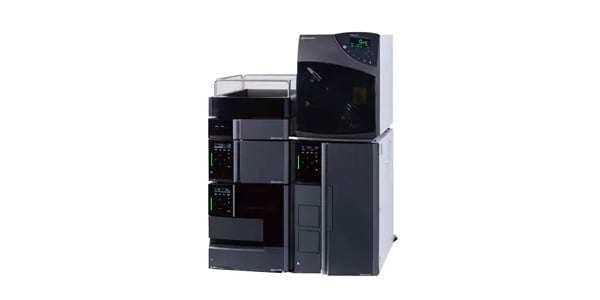

Nexera UC


- Compared with normal phase chromatography, SFC analysis of glucosylceramide is less toxic because chloroform is not used as mobile phase. - High speed analysis of glucosylceramide can be carried out as well as normal phase chromatography, resulting in high sensitivity detection. - Reduction of running cost can be expected because carbon dioxide is less expensive than organic solvents used in HPLC.
Glucosylceramide, which is contained in rice, corn, and konjak (also known as devil’s tangue), is a kind of glycosphingolipids. Glucosylceramide is often included in cosmetics because of its positive effect to moisturize the skin of human being. Glucosylceramide cannot be detected by UV-VIS spectrophotometric detector due to its very limited UV adsorption. Evaporative light scattering detector(ELSD) is a highly universal detector that detects scattering light from the target compounds after nebulization and evaporation of the mobile phase. ELSD can detect a lot of compounds regardless of their UV absorbing power. In general, a determination of the total amount of various molecular entities of glucosylceramide is carried out by using chloroform as mobile phase in order to elute them within a single peak. Supercritical Fluid Chromatography (SFC) employs carbon dioxide, which is low polar, as the mobile phase instead of chloroform. Therefore, SFC analysis of glucosylceramide is less toxic compared with normal phase chromatography. In this article, glucosylceramide originated from rice was analyzed by SFC-ELSD without using chloroform as mobile phase.
May 27, 2021 GMT
Some products may be updated to newer models