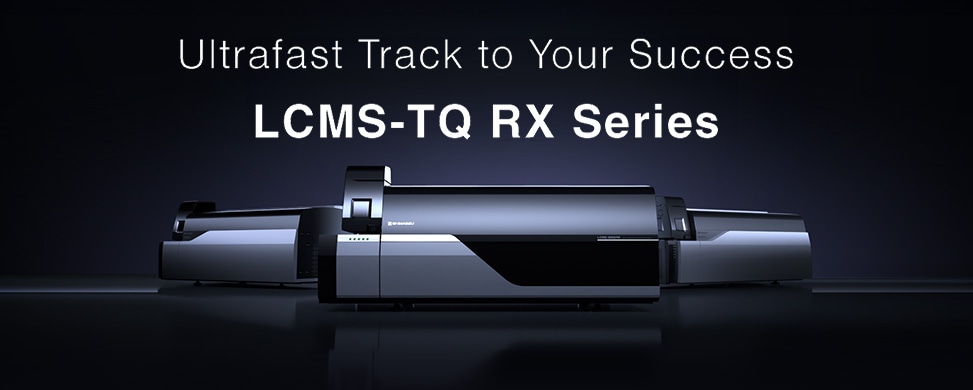
LCMS-TQ RX Series Triple Quadrupole LC-MS/MS


- Direct analysis of glufosinate, glyphosate, and AMPA is possible after derivatization. - Analysis is possible at a concentration (0.2 μg/L) of no more than 1/100 of the target values specified in “Complementary Items to Set the Targets for Water Quality Management” (MHLW). - Compounds in tap water can be analyzed with a satisfactory recovery rate.
Glufosinate is widely used as an amino acid-based herbicide, and glyphosate is a widely-used foliage-applied herbicide. Glyphosate forms the aminomethylphosphonic acid (AMPA) when metabolized in soil or water. As of March 2021, glufosinate, glyphosate, and AMPA are included in “Pesticides” (Item 15) of the target setting items in “Complementary Items to Set the Targets for Water Quality Management” established by Japan’s Ministry of Health, Labour and Welfare (MHLW), with targets values of 0.02 mg/L for glufosinate and 2 mg/L for glyphosate and AMPA. As the analysis method, “Simultaneous analysis by derivatization-solid phase extraction-liquid chromatograph-mass spectrometer” is specified in Appendix Method 22 (1) of Inspection Methods for Complementary Items. This article introduces an example of an analysis of glufosinate, glyphosate, and AMPA without concentration by solid-phase extraction (SPE) specified in Appendix Method 22 using a Shimadzu LCMS-8050. A satisfactory recovery rate was obtained for all three compounds at a concentration of 0.2 μg/L, which is 1/100 of the target value or less, confirming that highly precise analysis is possible.
July 16, 2021 GMT
Some products may be updated to newer models