HMV-G Series


- High speed tests of high-strength steel - Evaluation of the tensile strength-strain rate relationship of the materials
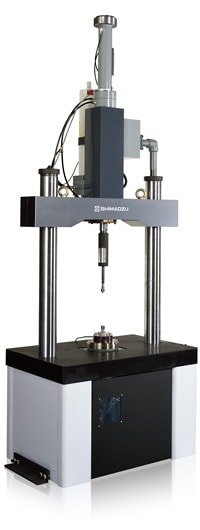
High-strength steels (HSS) provide better mechanical properties than conventional structural steels and are widely employed in the automotive field. In fact, HSS high specific strength (tensile strength divided by density) plays a key role in the weight reduction of car parts, greatly contributing to the reduction of CO2 emissions. One of the basic mechanical properties of the materials is the tensile strength, and can be measured with a conventional static tensile test (low speed). However, since the tensile strength of HSS increases with the strain rate, the tensile strength value obtained with a static test might not be suitable for an accurate component design. For such reason, in order to guarantee a safe and efficient design of automobile parts that may undergo impacts (high speed loads), high speed tests must be conducted to investigate the relationship between the material tensile strength and the strain rate. In this work, the tensile strength-strain rate relationship has been evaluated with tensile tests at a speed ranging from 0.0001 m/s to 5 m/s. Grip teeth featuring a pin allowed to conduct the tests without slippage. The results showed that tensile strength at high speed is 10% higher than the one measured at low speed.
September 2, 2021 GMT