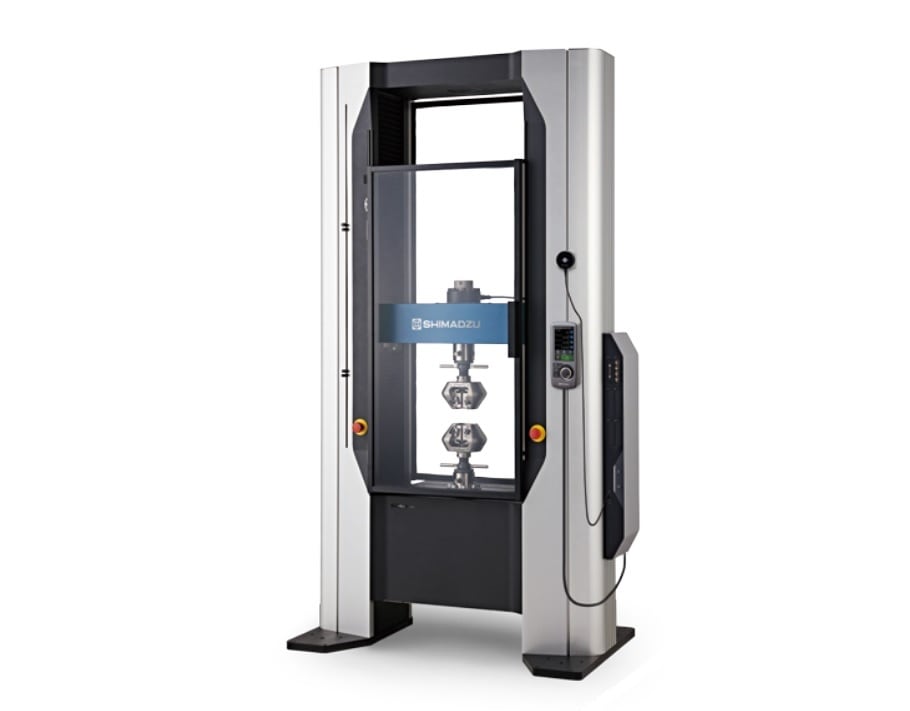
AUTOGRAPH AGX™-V2 Series


- It is possible to measure the interlaminar fracture toughness, which is necessary for designing CFRP. - The delamination length can be observed after testing by video recording delamination growth using TRViewX.
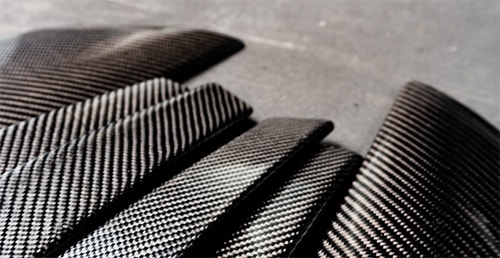
Applications of carbon fiber reinforced plastics (CFRP), which do not corrode and have high specific strength and specific stiffness compared to conventional materials, are being investigated primarily in regards to aerospace materials, which must be both strong and durable. However, CFRP laminates are known to exhibit excellent mechanical properties only in the reinforced direction (fiber direction), in contrast to the strength in the unreinforced directions (interlaminar direction, etc.), which is significantly lower. Also, CFRP laminates are not impact-resistant, and damages such as delamination can occur on impact. Therefore damage-tolerant designs, which take into consideration the effect of internal damage on the strength of the material, are incorporated in design and product development. In order to implement damage-tolerant designs, it is necessary to determine the resistance to delamination growth, so fracture toughness tests are performed. For homogeneous isotropic materials, normally only Mode I (opening mode) fracture toughness tests are performed. However, composite materials consisting of fibers in a plastic matrix are anisotropic, so it is important that they be evaluated not only in Mode I, but also in Modes II (in-plane shear) and III (out-of-plane shear). The Double Cantilever Beam (DCB) test evaluates the properties in pure Mode I. The stress intensity factor K is frequently used to evaluate the toughness of homogeneous isotropic materials. However, for composite materials that are anisotropic, the strain energy release rate G is generally used to evaluate interlaminar fractures. The strain energy release rate G is proportional to the square of the stress intensify factor K. In this article the Mode I interlaminar fracture toughness GIc was obtained by performing DCB tests in accordance with ASTM D5528.
April 5, 2022 GMT