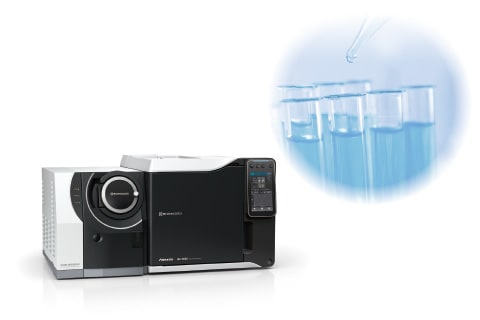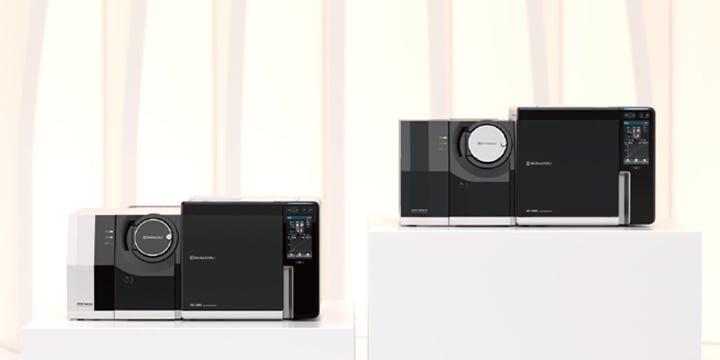
GCMS-TQ RX Series


- PCI-MRM mode is ideal for analyzing fatty acids, as it offers higher sensitivity than EI-MRM for unsaturated fatty acids. - Smart EI/CI ion source can switch between EI and PCI ionization methods without stopping the instrument. - Fatty acids in foods are easily analyzed using Smart Metabolites Database and fatty acid methylation kit.
Fatty acids are the components that make up lipids. They are essential to living organisms for energy metabolism and as nutrients. Fatty acid analysis has a long history, in medical applications for example to predict diseases or determine how healthy people are, and in food applications to improve the quality and functionality of food products during development. Because of the presence of carboxyl groups, fatty acids are difficult to measure directly in a GC-MS(/MS) system, so they are measured after derivatization by methylation into fatty acid methyl esters (FAMEs). There are many varieties of FAMEs, which differ in their carbon chain length, number or position of double bonds, and other characteristics. Although the EI ionization method is typically used for GC-MS, it tends to fragment FAMEs during ionization, resulting in the detection of large numbers of similar low-mass ions. Consequently, higher sensitivity and greater separation are needed. In contrast, positive chemical ionization (PCI) uses a reagent gas to ionize FAMEs indirectly, which makes the protonated molecules easier to detect. This is effective for separating ions with different molecular weights based on mass, but requires the separation of isomers in a chromatogram. The CI-MRM mode of GC-MS/MS involves fragmenting ionized protonated molecules via CID to improve mass separation between the contaminants and FAMEs. This article describes the results of a comparison of the sensitivity and quantitative accuracy of EI-MRM and CI-MRM modes.
April 5, 2022 GMT
Some products may be updated to newer models