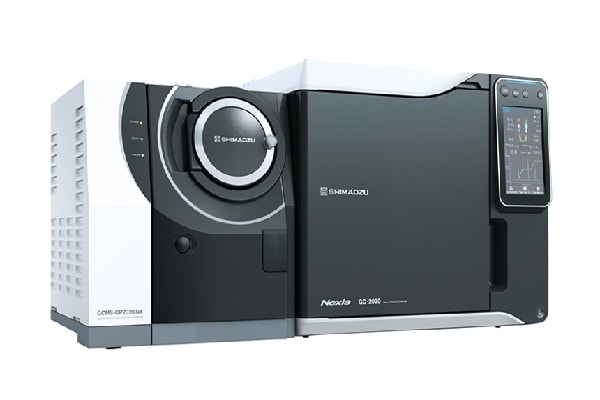
GCMS-QP2020 NX


- Multiple analytical techniques are available for moldy odor-causing substances in water, offering a variety of alternatives suited to the user’s circumstances. - Satisfactory measurement results can be obtained with all sample preparation methods.
In recent years, consumers have shown heightened interest in the safety and security of foods. Off-flavor (moldy odor) has also become a problem in drinking water in some cases, and various analytical techniques for confirming the safety of water are available. The substances that cause moldy odor are 2- methylisoborneol (2-MIB) and geosmin, which are produced by blue-green algae or streptomyces bacteria. Because the human odor detection threshold for these compounds is a very low concentration on the level of several ng/L, sample preparation and high sensitivity measurement are required in analysis. The sample preparation methods used with moldy odor- causing substances are purge and trap gas chromatography mass spectrometry (PT-GC/MS), head space trap GC/MS (HS Trap-GC/MS), solid phase micro-extraction GC/MS (SPME- GC/MS), and solid phase extraction GC/MS (SPE-GC/MS). This article introduces the features of these sample preparation methods.
April 5, 2022 GMT