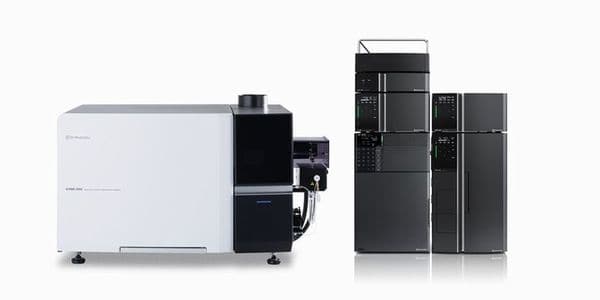
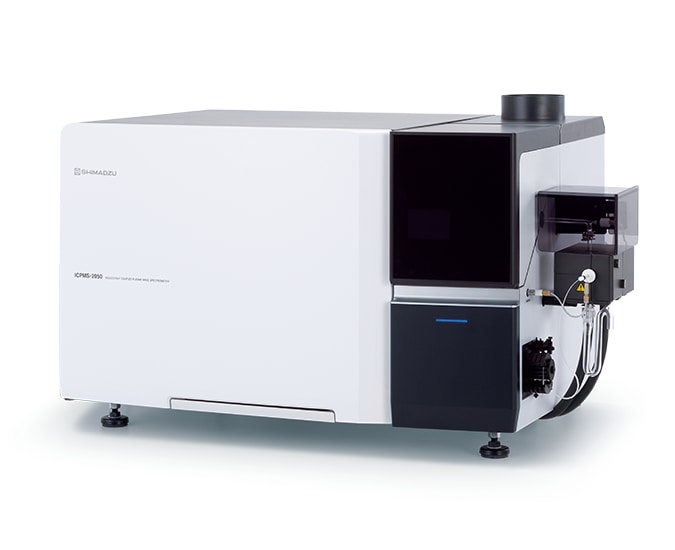
ICPMS-2040 Series / ICPMS-2050 Series


- Speciation analysis of mercury in seafood by LC-ICP-MS system can be performed accurately. - Using a method package for analyzing mercury species eliminates the need to register analytical conditions, etc. - The autosampler’s auto-dilution function eliminates any manual dilution process, saving time and effort.
Mercury tends to accumulate through the food chain, and some foods, such as seafood, may contain high levels of mercury. However, mercury exists in various forms, and the toxicity differs depending on the form. Generally, methyl mercury is more toxic than inorganic mercury and other organic mercury. Evaluating the toxicity in food requires not only analysis as total mercury but also by the form of mercury. LC-ICP-MS, which separates mercury by species using HPLC and detects mercury with high sensitivity using ICP-MS, is an analytical method suitable for the speciation analysis of mercury. In this Application News, speciation analysis of methyl mercury and total mercury in seafood was performed using an LC-ICP-MS system, which connected ICPMS-2040/2050 with Nexera XS inert. Furthermore, we also evaluated the automatic dilution function of the Nexera series autosampler for the speciation analysis of mercury.
May 13, 2025 GMT
Some products may be updated to newer models