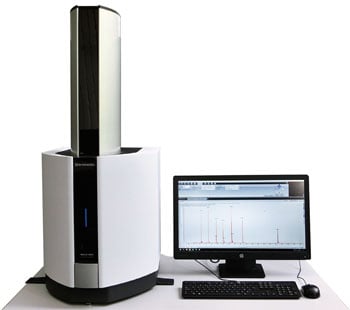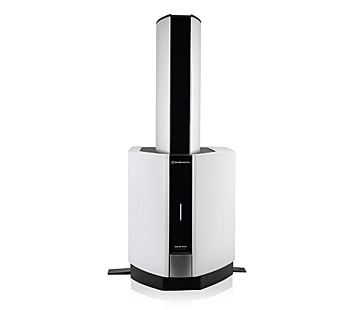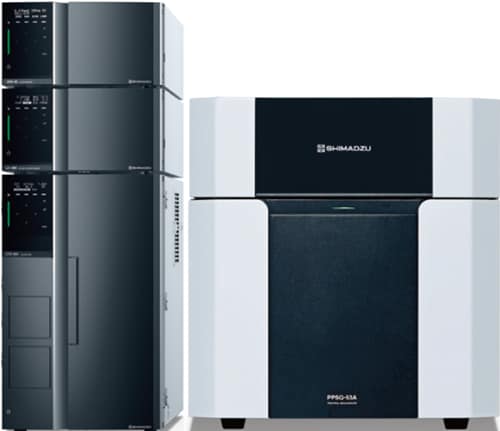
PPSQ-51A/53A


- Amino acid sequences from the N-terminus can be reliably identified even in minute sample volumes. - Combined with MALDI-ISD analysis, information on the C-terminus and modified amino acids can be obtained. - Amino acid sequences of proteins that are not registered in genome databases can be easily determined.
Proteins expressed in vivo are post-translationally modified to have various functions. In recent years, attention has been focused on peptide therapeutics, which are medium-molecular drugs, and peptides containing non-natural amino acids that have been modified on the side chains of natural amino acids have been synthesized as the constituent amino acids. The inclusion of non-natural amino acids causes changes in various physical properties and steric structures, resulting in peptides with unique functions that can be used as pharmaceuticals. Analytical methods for peptide drug characterization include amino acid sequence analysis methods on protein sequencers using Edman degradation and MS analysis and search engines, each of which can be difficult to use with a single method to analyze modified amino acids. In this report, we present an example of accurate amino acid sequence analysis of a peptide containing modified amino acids by combining mass and sequence information obtained from in-source decay (ISD) measurements by matrix-assisted laser desorption/ionization time-of-flight mass spectrometry (MALDI-TOF MS) and N-terminal amino acid sequence information from the PPSQ-50A gradient system. The following is an example of accurate amino acid sequence analysis of a peptide containing modified amino acids by combining mass and sequence information obtained from in-source decay (ISD) measurements by TOF MS and N-terminal amino acid sequence information obtained from the PPSQ-50A gradient system.
June 10, 2025 GMT