
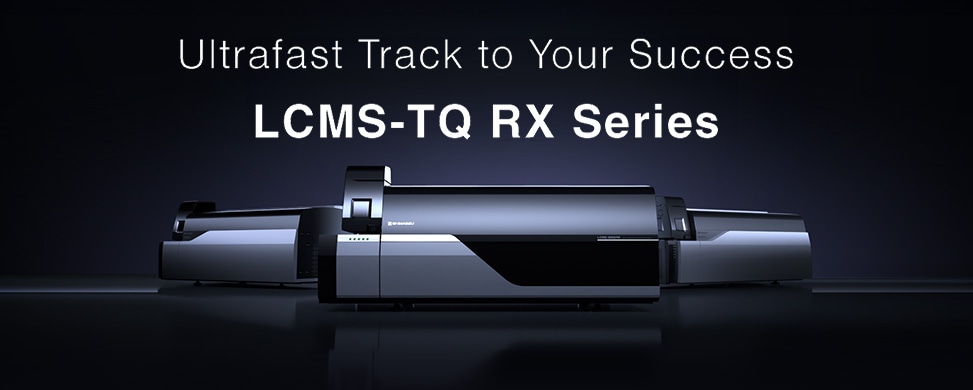
LCMS-TQ RX Series Triple Quadrupole LC-MS/MS


- Using automatic method switching, a single Shimadzu LCMS-8060RX triple quadrupole mass spectrometer can effectively measure both PFAS and cyanotoxins in water following EPA Methods 533, 545, and 544. - The system sustains high performance over extended operation time and multiple method changes with only a five-minute rinse. - High performance with lower cost enables labs to respond swiftly to harmful algal blooms without impacting routine workflows.
Per- and polyfluoroalkyl substances (PFAS) are synthetic chemicals widely used in consumer products and industrial applications. Their chemical stability and resistance to degradation have resulted in environmental persistence and accumulation. As a result, regulatory bodies like the US Environmental Protection Agency (EPA) and the European Chemicals Agency (ECHA) are implementing measures to limit their environmental presence. In the U.S., EPA Methods 537.1 and 533 are approved for quantifying specific PFAS in drinking water using solid-phase extraction (SPE) and LC-MS/MS. Method 537.1 targets 18 PFAS compounds. Method 533 targets a set of 25 PFAS, including many shorter-chain compounds like ADONA, which are not covered by 537.1. Accounting for the overlap between the two lists, these methods collectively enable the quantification of 30 unique PFAS compounds including GenX and ADONA. Beyond PFAS, other drinking water contaminants such as cyanotoxins also pose serious health risks. Cyanobacteria (blue-green algae) are photosynthetic organisms found in freshwater and marine environments. Human-driven nutrient enrichment, especially phosphorus and nitrogen, has led to an increase in Harmful Algal Blooms (HABs) globally. These blooms can produce toxins like cylindrospermopsin, anatoxin-a, and microcystins, which impair water quality and may cause effects ranging from skin irritation to severe illness in humans and animals. To address the growing concern over cyanotoxins in drinking water, the US Environmental Protection Agency (EPA) has established analytical protocols—Methods 544 and 545—for their detection in both drinking water and freshwater matrices. EPA Method 544 focuses on the detection of microcystins and nodularin, which are commonly produced by certain species of cyanobacteria. In parallel, EPA Method 545 is designed to target other potent cyanotoxins, specifically cylindrospermopsin and anatoxin-a. Both methods employ liquid chromatography-tandem mass spectrometry (LC-MS/MS) for quantitative analysis. While dedicated instruments for PFAS and cyanotoxin analysis are ideal to avoid cross-contamination, a single system capable of multi-method testing offers a practical and cost-effective alternative, especially during high-demand or emergency situations. We previously demonstrated accurate and robust analysis of PFAS and cyanotoxins following EPA Methods 537.1, 545, and 544 on the Shimadzu LCMS-8060RX triple quadrupole mass spectrometer with automatic method switching. In this application, we expanded the evaluation to include EPA Methods 533, 545, and 544 on the same platform.
June 30, 2025 GMT
Some products may be updated to newer models