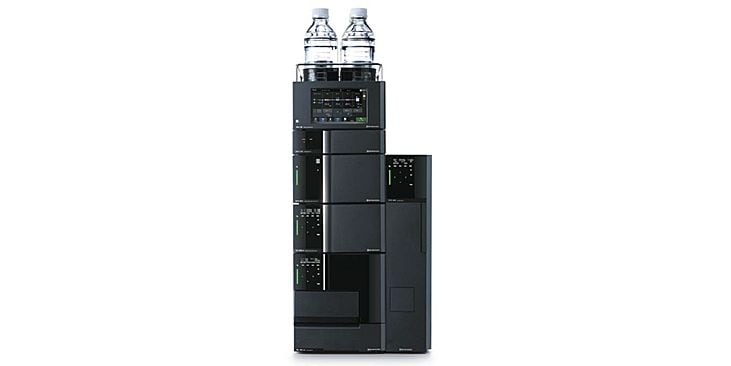
Nexera Series Ultra High Performance Liquid Chromatograph


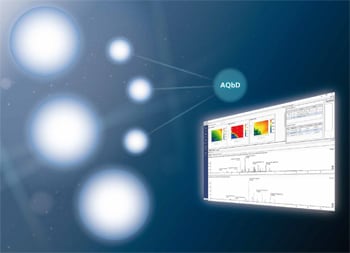
- Method development is generally performed using LC detectors such as a photodiode array (PDA) detector. However, incorporating mass information obtained from a mass spectrometer enables more accurate peak tracking. - By visualizing resolution within the design space, the search for optimal separation conditions in method development can be streamlined without relying on intuition or experience.
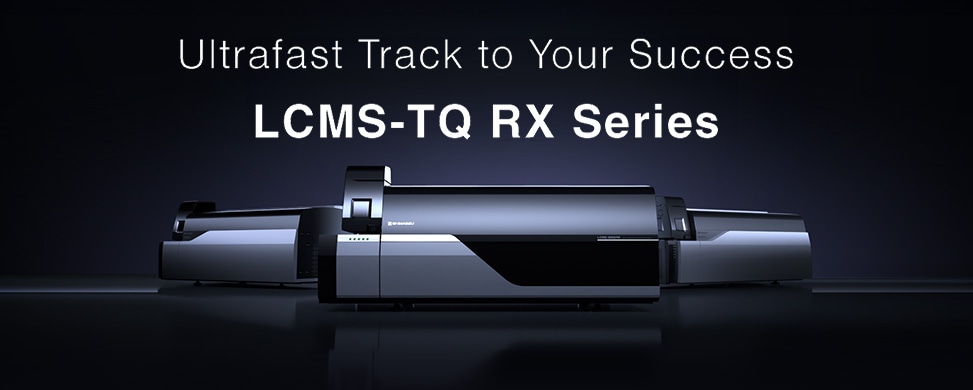
In the process of separation optimization during method development, optimal analytical conditions are explored by varying LC parameters such as mobile phase composition, gradient profile, and column oven temperature. However, accurate peak tracking across multiple chromatograms can be challenging because differences in separation conditions may cause variations in retention times or co-elution of compounds. Although peak tracking based on differences in UV spectra obtained with a PDA detector can be applied, accurate identification of impurities and co-eluting peaks is often difficult using UV information alone. In contrast, combining a PDA detector with a mass spectrometer can improve tracking accuracy, particularly for low-abundance compounds and impurities. This article describes a case study in which the combination of LabSolutions MD, a dedicated software for supporting method development, and LCMS-8060RX triple quadrupole mass spectrometer enabled efficient exploration of optimal separation conditions through accurate MS-based peak tracking for the simultaneous analysis of six small-molecule pharmaceutical compounds.
November 4, 2025 GMT
This application relates to an invention for which a patent application is pending.
Some products may be updated to newer models