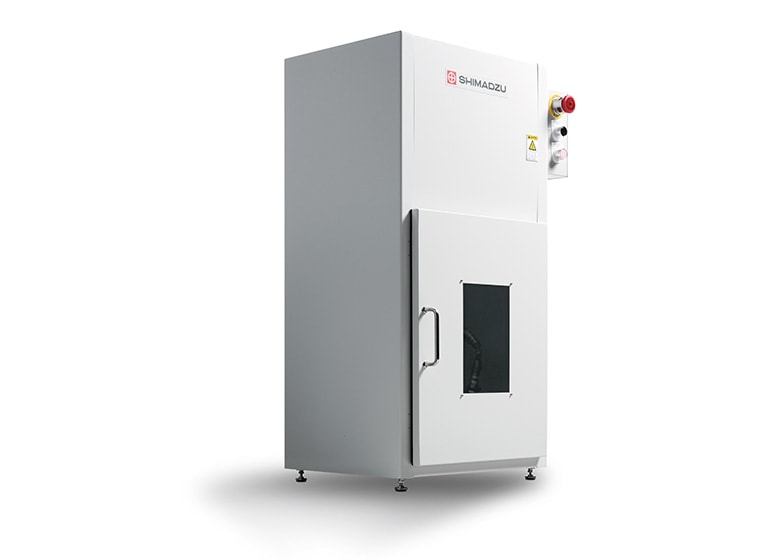
USF-2000A


- Fatigue testing at 20 kHz can be performed using an ultrasonic fatigue testing machine, and 109 cycle fatigue tests can be completed in about 14 hours. - High-temperature fatigue tests can be performed by using a combination of an ultrasonic fatigue testing system and an induction heating furnace. - The origins of fatigue fractures and inclusions can be identified by observations and element distribution measurements using an electron probe microanalyzer.
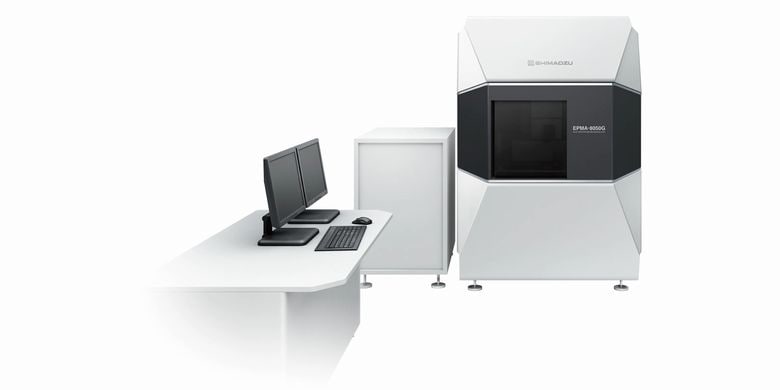
Inconel 718 has excellent heat and corrosion resistance and high strength. Its mechanical properties can be maintained even under high-temperature environments, which is why it is used in harsh environments, such as in the jet engines and turbine blades in the aerospace industry, and in gas turbines and nuclear power plant parts in the energy industry. In these applications, long-term reliability is crucial, making fatigue testing essential. However, this can be time-consuming; for example, gigacycle fatigue testing exceeding 109 cycles takes three to four months at a frequency of 100 Hz when using a conventional fatigue testing machine. But with the USF-2000A ultrasonic fatigue testing system, tests performed at a frequency of 20 kHz can be completed in approximately 14 hours. This article describes using the USF-2000A to perform gigacycle fatigue tests on Inconel 718 at 600 °C. In addition, the EPMA-8050G, which is an electron probe microanalyzer (EPMA), was used to observe the fatigue fracture surfaces and measure the element distribution.
March 10, 2026 GMT