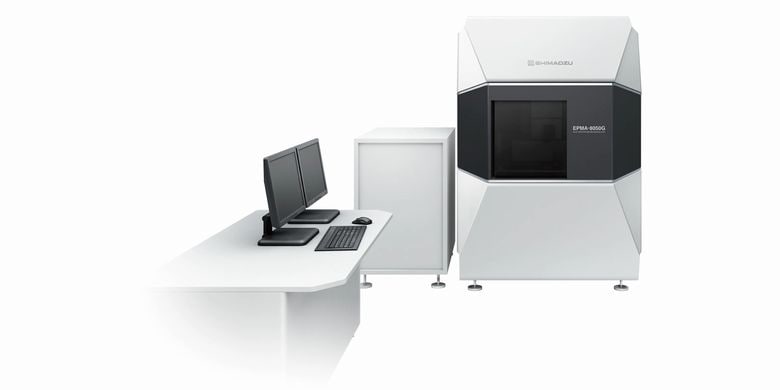
EPMA-8050G


- EPMA can be used to check for impurities, such as current collector foils, contained in black mass. - Compounds formed by heat treatment can also be investigated by EPMA. - The types of positive electrode active materials contained in black mass can be identified by using phase analysis.
In recent years, use of lithium-ion batteries (LIBs) has increased as a result of the widespread adoption of smart devices and electrification of automobiles with the aim of achieving carbon neutrality. Although the materials used in batteries are obtained from valuable mineral resources, securing resources by battery recycling is required in order to reduce the risks associated with raw material procurement and the environmental impacts of industrial wastes. In particular, black mass, which is obtained from used LIBs, is a core resource for recycling rare metals such as Li (lithium) and Co (cobalt). An accurate evaluation of the quality of black mass is indispensable for enhancing the metal recovery rate and possibility of reuse. Understanding the metal content and the types and concentrations of impurities in black mass will contribute to optimization of the recycling process and stabilization of product quality. This article introduces an example of an analysis of positive electrode active materials contained in black mass using an EPMA electron probe microanalyzer (EPMA-8050G).
March 10, 2026 GMT