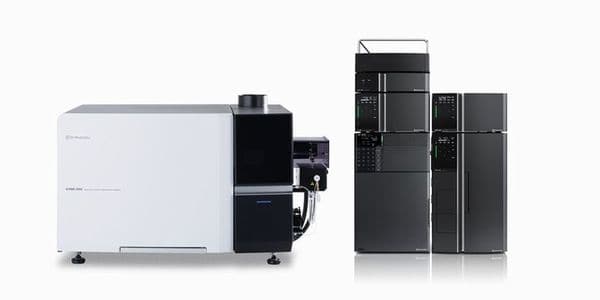
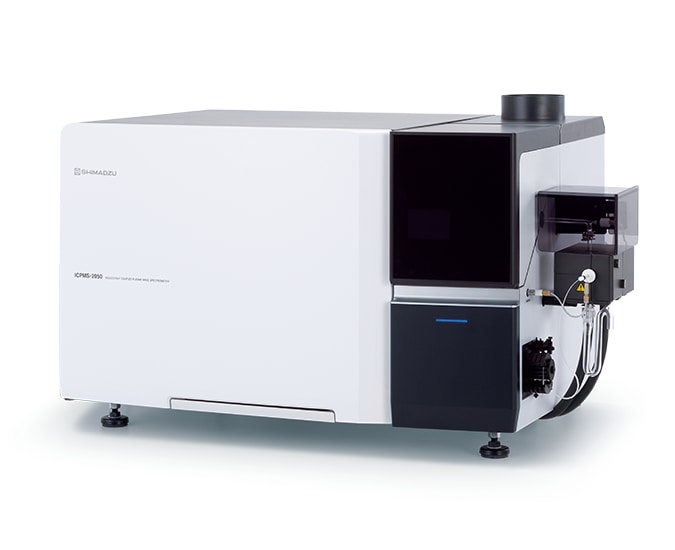
ICPMS-2040 Series / ICPMS-2050 Series


- Inorganic arsenic can be separated from organic arsenic and chlorine interference peaks in a short 6.5-minute runtime and analyzed with high sensitivity. - Even in samples that contain large amounts of organic arsenic such as seafood, inorganic arsenic can be separated and measured. - Inorganic arsenic in a wide variety of food and animal feed samples can be accurately quantified.
Arsenic (As) exists in multiple chemical forms, and among them inorganic arsenic (iAs) is generally more toxic than organic arsenic. For this reason, many countries require the monitoring of inorganic arsenic in food and animal feed. In the EU, regulatory limits for inorganic arsenic in food and feed are specified in Commission Regulation (EU) 2023/915 (food) and Directive 2002/32/EC (feed). In addition, (EU) 2025/1891 established new maximum permitted concentrations for inorganic arsenic in seafood, effective September 17, 2025. In the United States, the Baby Food Safety Act 2021 also includes the maximum levels of inorganic arsenic in baby food. Food matrices can contain large amounts of organic arsenic or chlorine, which may interfere with analytical results. Therefore, it is necessary to remove the effects of these interferences. In this Application News, inorganic arsenic in a variety of foods and animal feeds was quantified using LC-ICP-MS based on EN 16802:2016 (food) and EN 17374:2020 (animal feed).
March 24, 2026 GMT
Some products may be updated to newer models