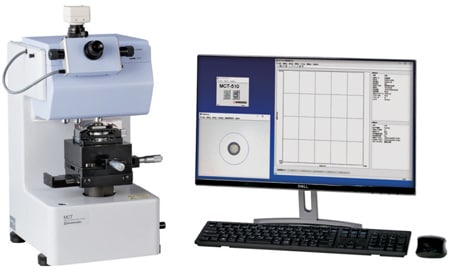
MCT Series


- The tests are automated, which significantly reduces the time required of the operators. - Up to 100 continuous tests can be performed. - Particle size measurement is performed by software, which reduces differences in measurement between operators.
Lithium-ion batteries have become an indispensable energy source in a wide range of fields, from everyday items like smartphones and laptops to electric vehicles and renewable energy storage systems. The batteries consist of a positive electrode, a negative electrode, an electrolyte, and a separator. Positive electrodes use transition metal oxides (e.g., lithium nickel manganese cobalt oxide [NMC]) or lithium iron phosphate (LFP) to transfer lithium, and negative electrodes generally use graphite and, recently, high-capacity materials, such as silicon. One of the issues with lithium-ion batteries is that the positive and negative electrodes are prone to cracking. This is caused by the high pressures during manufacturing, as well as during charging and discharging. This is also thought to affect their performance, such as the cycle properties. Therefore, research is being conducted on the relationship between mechanical properties and the electrochemical performance. This Application News presents compression tests on various battery materials as examples of quantitative evaluations of their mechanical properties. The MCT series of micro-compression testing machines can perform compression testing of minute single particles. In addition, the MCT-AD model can automatically perform extraction of measurement particles, length measurements, and test operations. This results in significant time savings and enables evaluations with a larger number of measurements.
May 20, 2026 GMT
This application relates to an invention for which a patent application is pending.