LCMS-9050


- Oxygen Attachment Dissociation (OAD) is a novel MS/MS fragmentation technology that induces (C=C) position-specific fragmentation. - Simultaneous acquisition of OAD-MS/MS and CID-MS/MS in positive or negative ESI mode enables lipid identification to the structural level. Automated analysis of OAD-MS/MS data is supported in MS-DIAL. - OAD-MS/MS increases reporting confidence in lipid identification.
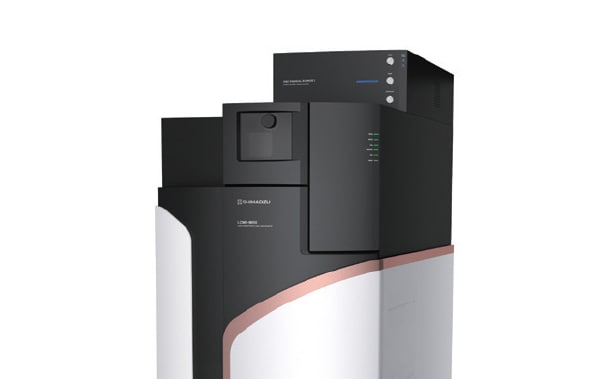
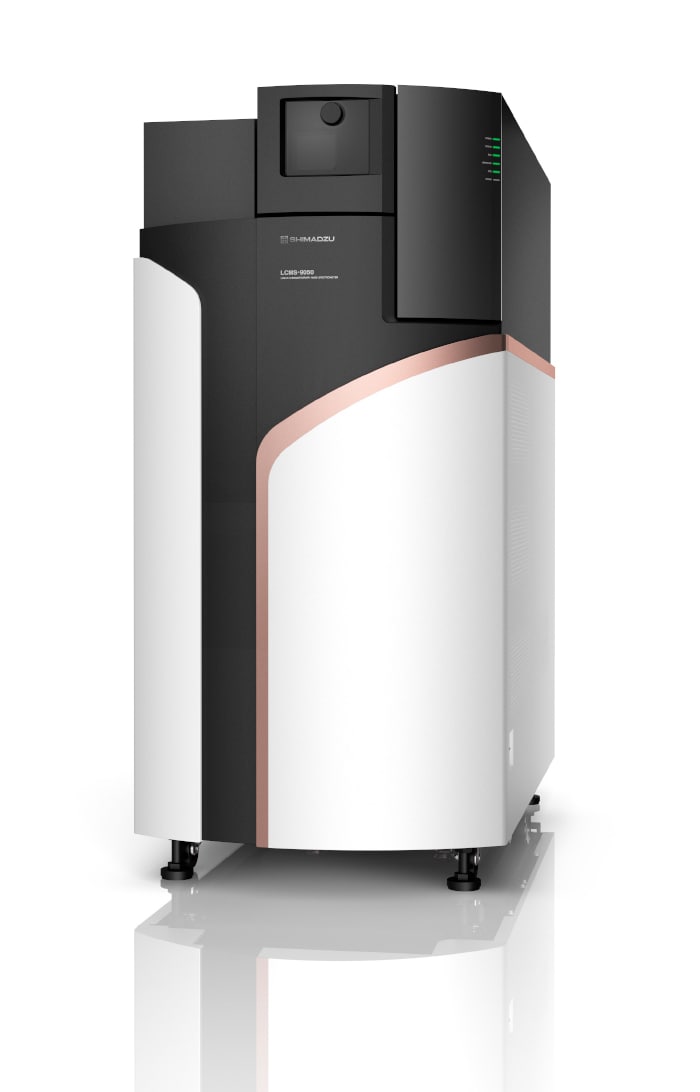
In metabolomics and lipidomics studies, the structural characterisation of lipids requires the identification of carbon number as well as the number and position of double bonds. Identifying carbon-carbon double bond (C=C) position(s) presents a major challenge in unsaturated lipid characterisation; however it is vital to understand a biological mechanism, since minor structural differences between positional isomers can alter the biochemical function of a lipid. Oxygen Attachment Dissociation (OAD) MS/MS is a novel method for specific fragmentation of C=C bonds, providing additional fragmentation to CID in positive and negative ESI mode on the LCMS-9050. It involves the generation of O/OH• radicals by microwave discharge of water vapour which are introduced into the collision cell via an inductively coupled plasma through a quartz tube. Neutral radicals interact with precursor ions to specifically oxidise/dissociate the double bonds between carbons. A key advantage is that spectra can be acquired with simultaneous OAD-MS/MS and CID-MS/MS (in either positive or negative ion mode) to generate sufficient information to identify lipids to the structural level. In this application, OAD-MS/MS was applied to an untargeted metabolomics study following ethanol-induced exposure in mice. Tissue extracts from gut, liver and pancreas were analysed using UHPLC-OAD-MS/MS to increase reporting confidence in the identification for organ-specific changes in the lipid profiles of gut, liver and pancreas of mice in response to ethanol toxicity.
July 21, 2026 GMT