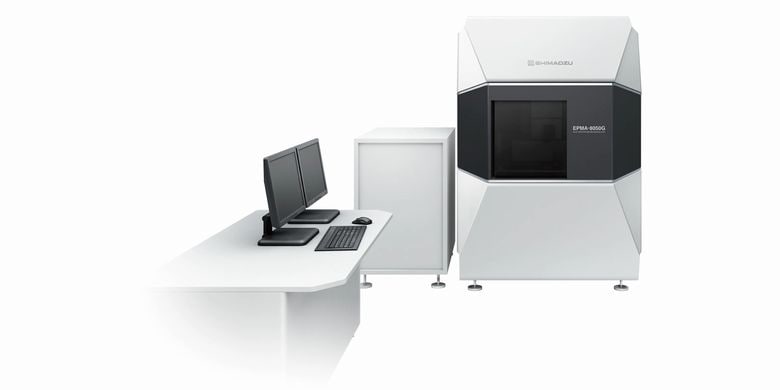
EPMA-8050G


Lithium ion batteries (LIB) are storage batteries in which the cell is charged and discharged by desorption/insertion of lithium ions (Li+) in the structure of the active material. The applications of LIB have expanded dramatically in recent years, and active research is underway with the aims of achieving higher capacity, longer life, lower cost, and improved safety. The main components of a LIB are the positive electrode, negative electrode, separator, and electrolytic solution, and among these, the positive electrode is the key element for enhanced performance. The positive electrode has a structure in which a mixture of the active material, binder, and conductive additive are coated on a collector made of aluminum foil. Evaluation of the distribution of these components is important in improvement of cell performance, quality control, and failure analysis. This article introduces an example of analysis of the positive electrode of a LIB using a Shimadzu EPMA-8050G EPMATM electron probe microanalyzer.
October 27, 2020 GMT