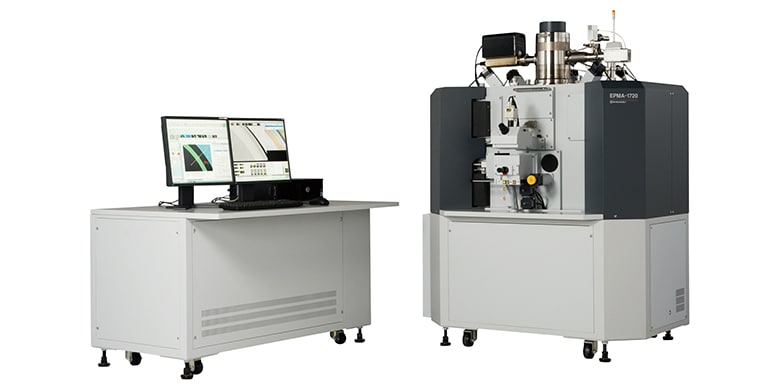

EPMA-8050G


- Useful in research related to macroscopic analysis of the composition of the entire weld. - Useful in research related to analysis of the film thickness bond strength.
Friction stir welding (FSW) is a method of solid-state welding of dissimilar materials by using the frictional heat generated by rotation of a tool, and is widely used for the purpose of weight reduction in various fields, including not only automobiles, but also railway rolling stock, aircraft, ships, civil structures, and electrical equipment. In recent years, lighter weight products and improved production efficiency have been required in response to demand for protection of the global environment and energy saving, and various research and development have progressed with the aims of optimization of the welding process and microstructural control of the juncture/interface in FSW welds. Like FSW, friction stir spot welding (FSSW) is a spot welding method which utilizes the friction stirring phenomenon and has already been applied practically in automobile production lines. This article introduces an example of analysis of the bonded interface of an FSSW weld of an aluminum alloy and a zinc- coated steel sheet using a Shimadzu EPMA-8050G EPMATM electron probe microanalyzer.
November 2, 2021 GMT