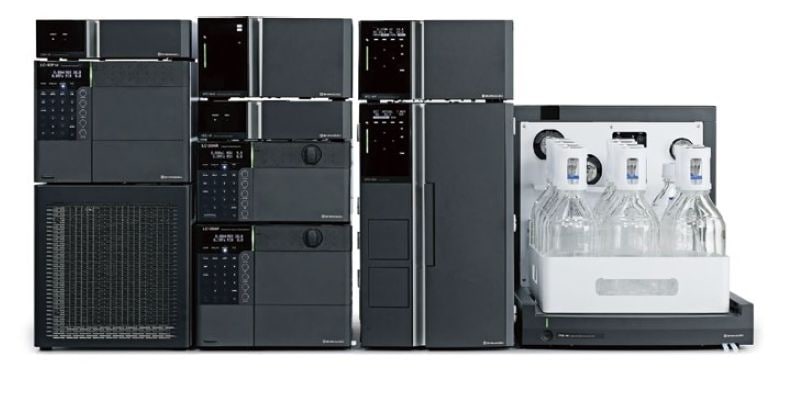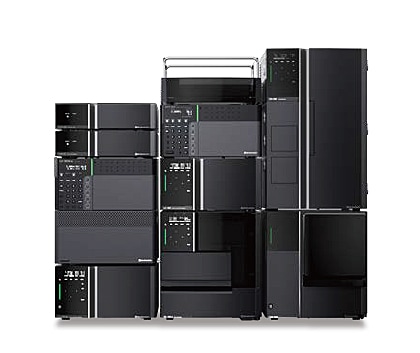
Nexera UC


- Supercritical fluid chromatography (SFC) enables preparative purification of volatile compounds such as aroma components. - The analytical fraction system enables a smooth transition from analysis to preparative purification. - The unique “LotusStream” gas-liquid separator enables recovery of target components with high purity and high yield.
Many aroma components in foods, beverages, personal care products, and essential oils are volatile compounds with low molecular weights. Many of them are chiral compounds with enantiomers. Generally, enantiomers have different pharmacological effects in pharmaceuticals. Similarly, since enantiomers of aroma components can smell different, their ratio can affect the quality and intensity of fragrances. Thus, enantiomeric separation and preparative purification are required in the development process to understand such differences between enantiomers. Conventionally, volatile compounds, such as aroma components, are separated and fractionated by gas chromatography (GC). GC offers high resolution, but the small loading volume per injection and the long analysis time can be problems. Preparative purification by supercritical fluid chromatography (SFC) enables faster loading and analysis of the same volume as conventional liquid chromatography (LC). Furthermore, carbon dioxide used as the eluent for SFC is vaporized at room temperature and pressure, leaving only a small amount of organic solvent in the separated fraction. That enables easy concentration of samples in fractions. This article describes an example of preparative purification of linalool in a lavender essential oil using the Nexera UC analytical fraction collection system.
March 15, 2023 GMT